While most of “MasterChef: Global Gauntlet” Episode 5 descended into pure chaos, one contestant quietly turned herself into the biggest breakout star of the season so far. Amid medical emergencies, burned components, and the now-infamous bandage disaster that sent Nora home, Aishu emerged as the unexpected frontrunner of “MasterChef” 2026 — and fans are suddenly taking her very seriously.

The first team challenge of Season 16 was supposed to introduce the new “Global Gauntlet” format, where contestants compete not only for themselves but also for their entire region. Instead, the episode quickly became dominated by panic and mistakes. Nora spiraled throughout the challenge before accidentally serving a sandwich containing a bandage. Julia struggled with undercooked polenta fries and burnt pancetta. Jake overcomplicated his dish and missed the mark on execution.
But while almost every storyline revolved around disaster, Aishu delivered the exact opposite.
From the moment the judges approached her station, there was a noticeable difference in confidence and control. Unlike many contestants who appeared overwhelmed by the pressure of the first real challenge, Aishu seemed calm, organized, and fully aware of her vision. That composure translated directly onto the plate.
The judges’ reactions immediately stood out as some of the strongest praise anyone has received this season.
Gordon Ramsay declared that Aishu had “absolutely nailed” the challenge and said she was completely “on the money.” Joe Bastianich praised the balance of flavors, particularly the harmony between sweet and savory elements in her dish. Meanwhile, Tiffany Derry gave perhaps the most telling compliment of all when she admitted it was a snack she would gladly eat anytime.

In a night where most contestants were criticized for confusion, overthinking, or poor execution, Aishu’s dish felt focused, polished, and intentional. That difference mattered.
The judges ultimately awarded her “Dish of the Night,” making her the first major standout of the post-audition phase of the competition. But the victory carried consequences far beyond personal success.
Because Aishu won the challenge, the entire Asia-Pacific team received immunity from elimination.
That twist instantly changed the entire narrative of the episode.
Moments after celebrating Aishu’s win, Gordon revealed that fellow Asia-Pacific contestant Shompa had actually produced one of the worst dishes of the night. Her fried chicken thighs were criticized for poor timing and questionable execution, and under normal circumstances, she would have faced possible elimination.
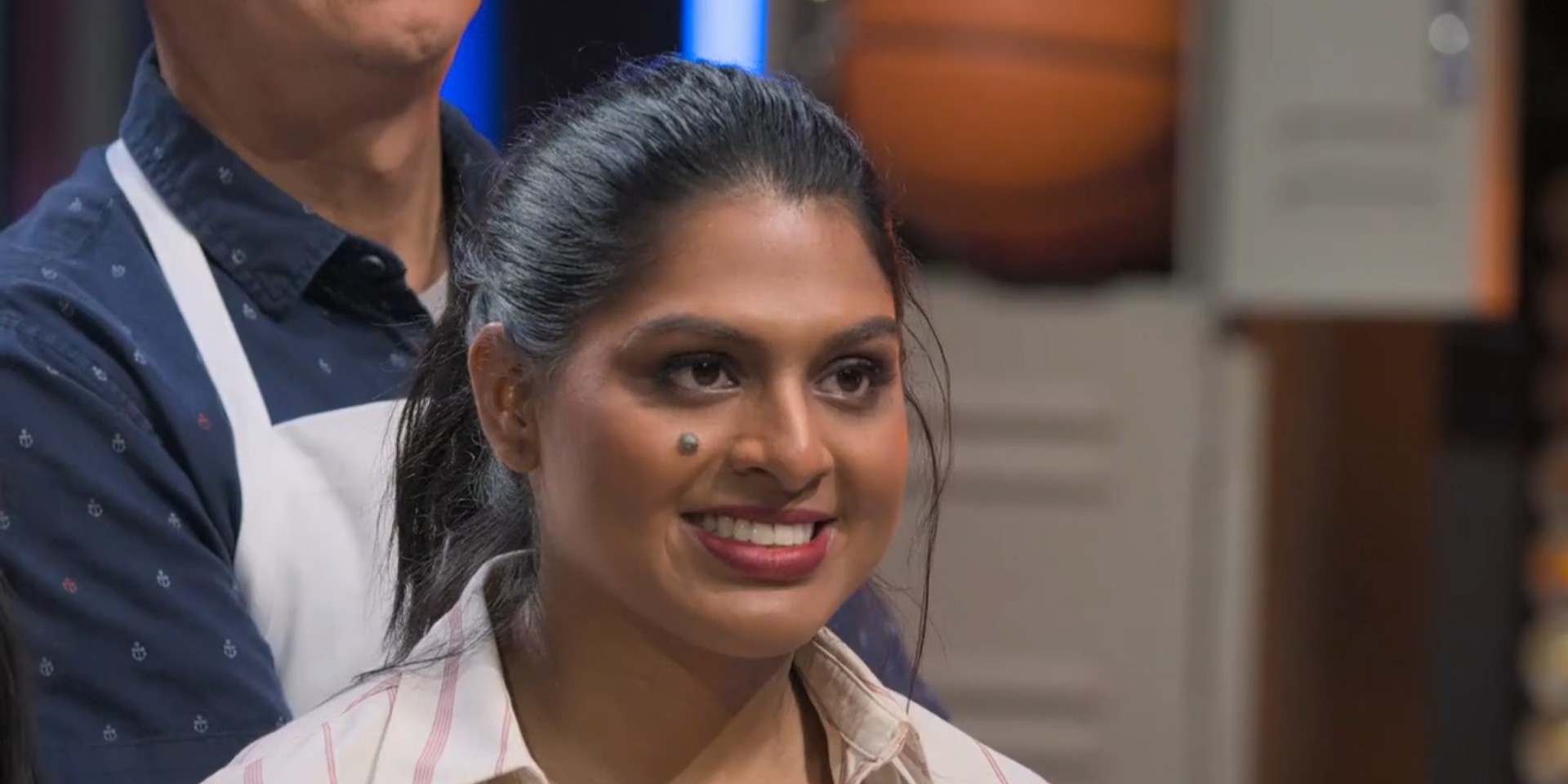
Instead, Aishu’s performance saved her.
That revelation immediately triggered debate across the fan community online. Many viewers praised the new format for adding strategic and emotional complexity to the competition. Others questioned whether it was fair for one contestant’s success to completely erase another contestant’s disastrous performance.
Some fans compared it to team-based reality competition shows like “Survivor” or “Top Chef” Restaurant Wars, where strong players are forced to carry weaker teammates. Others argued that the new format risks creating resentment inside regional groups if one contestant repeatedly becomes responsible for protecting everyone else.
Either way, the episode made one thing very clear: “Global Gauntlet” is no longer just about individual cooking ability.
Now contestants are also fighting for regional pride, team survival, and collective reputation.
That dynamic may completely transform the season moving forward.
Instead of simply asking “Who cooked badly?” viewers are now asking far messier questions: Who is carrying their region? Who is dragging the team down? And how long will stronger cooks tolerate weaker teammates surviving because of someone else’s talent?
Ironically, Aishu may have become the first contestant to fully understand the format before everyone else.
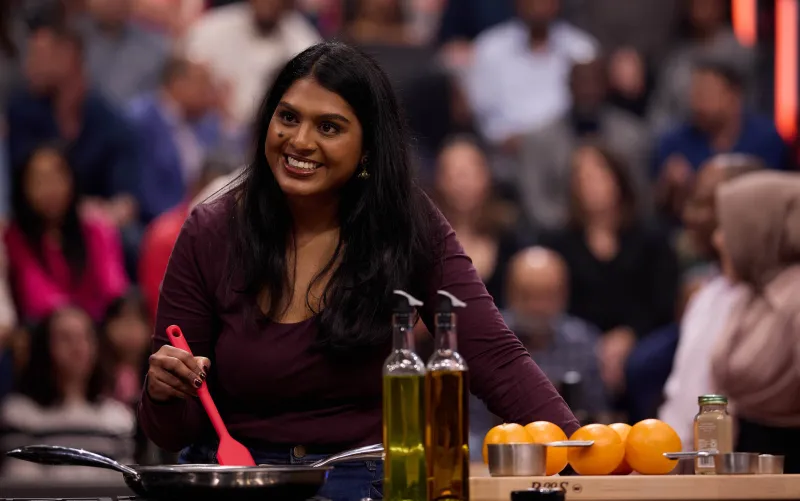
While the rest of the kitchen was collapsing under pressure, she delivered exactly what the challenge required: elevated stadium food with a strong cultural identity, clean execution, and smart flavor balance. More importantly, she did it at the exact moment her region needed someone to step up.
That is why many fans are now calling her the first true frontrunner of “MasterChef” Season 16.
In a single episode, Aishu didn’t just win a challenge. She potentially changed the power structure of the entire competition.