In a move that caught fans off guard, Cutthroat Kitchen — long associated with Alton Brown — has once again been sidelined in 2026, barely a year after its much-hyped return. The abrupt suspension has sparked confusion across the culinary TV community, especially given the show’s cult following and its reputation as one of the most chaotic, unpredictable formats ever aired on Food Network.
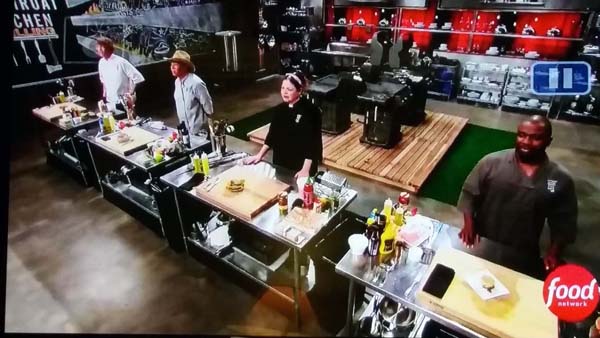
For many viewers, the question wasn’t just why now — but what replaces something that wild?
The answer appears to be a bold reinvention.
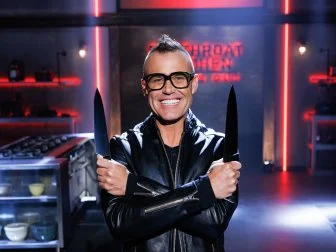
Enter Cutthroat Kitchen: Knives Out, a reimagined version of the franchise hosted not by Brown, but by Brian Malarkey. Slated to premiere May 13, the new series keeps the core DNA of sabotage-driven cooking — but shifts tone, structure, and strategy in ways that suggest a much larger pivot from Food Network.
From Chaos to Controlled Strategy
The original Cutthroat Kitchen thrived on absurdity. Contestants sabotaged each other with ridiculous handicaps — cooking without utensils, using bizarre equipment, or working under extreme limitations. It was messy, comedic, and often gloriously unfair.
That unpredictability became its identity.
But Knives Out reframes that chaos into something more calculated.
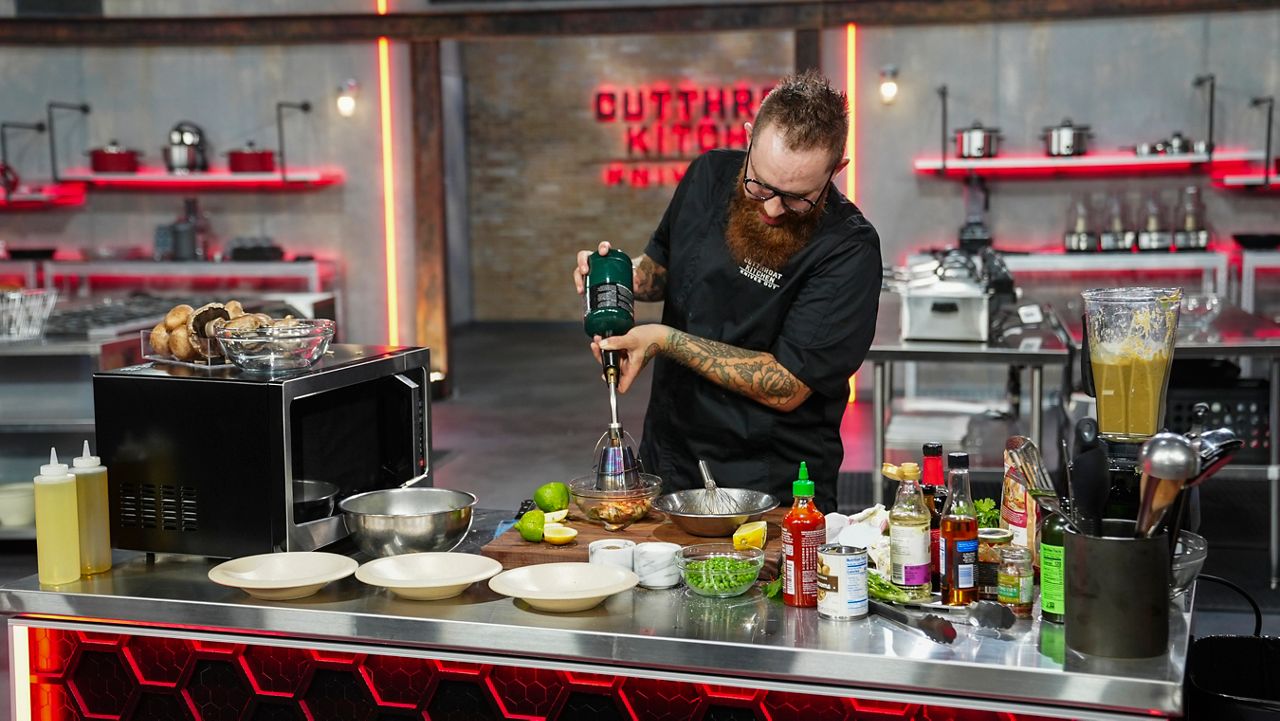
In the new format, four chefs begin each episode with $25,000 in their personal “bank.” Throughout the competition, they can spend that money to either gain advantages or sabotage their opponents. Whatever remains at the end is theirs to keep — turning every decision into a strategic gamble.
The twist? Sabotage is no longer just for laughs — it’s currency.
Round one introduces the mechanics: contestants face a challenge set by Malarkey, bid on advantages, and endure sabotages, all while racing against time after a frantic one-minute ingredient grab. One chef is eliminated early, while the winner earns a small financial boost.
By round two, the gloves come off. The remaining chefs actively bid against each other to assign sabotages — forcing rivals to cook under bizarre conditions, like preparing upscale meals using a popcorn machine or scavenging ingredients mid-flight from snack carts.
It’s still chaotic — but now it’s tactical chaos.
Why the Original Had to Go?
Food Network hasn’t framed the move as a “cancellation,” but the timing — and the introduction of Knives Out — tells a clearer story: this isn’t just a pause, it’s a repositioning.
Industry insiders and fans alike have pointed to a growing trend in food television: a shift toward strategy-based competition formats. Shows like Next Level Chef and Tournament of Champions emphasize decision-making, long-term planning, and mental gameplay just as much as cooking skill.
In that context, the original Cutthroat Kitchen may have started to feel… outdated.
Its appeal was rooted in unpredictability, but not necessarily progression. Episodes were entertaining, but often self-contained. There was little sense of evolving strategy or layered gameplay — something modern audiences increasingly expect.
By contrast, Knives Out introduces a clear meta-game: how much money do you spend now versus save for later? Do you sabotage aggressively or play defensively? Every choice has consequences beyond a single dish.
That shift may explain Food Network’s decision more than any official statement.
Fans Divided Over the Change
Still, the reaction hasn’t been entirely positive.
For longtime viewers, the original Cutthroat Kitchen wasn’t supposed to make sense — that was the point. Its over-the-top sabotages, paired with Alton Brown’s dry humor, created a tone that felt unlike anything else on television.
Replacing that with a more structured format risks losing what made the show special.
Many fans have already questioned whether the new version can capture the same chaotic magic, or if it will feel more like a conventional competition with a gimmick attached.

At the same time, others are intrigued. The addition of financial strategy and competitive bidding could elevate the format, making it more intense and replayable.
A New Era for Culinary Competition?
Adding further credibility to the reboot is its rotating panel of judges, including Maneet Chauhan, Scott Conant, Alex Guarnaschelli, Aarti Sequeira, and Jet Tila. Their blind evaluations — tasting dishes without knowing the sabotages involved — aim to bring a level of fairness that the original series often deliberately ignored.
That detail alone signals a philosophical shift: from pure entertainment chaos to skill-based competition under pressure.
Whether that’s an improvement or a compromise depends on who you ask.
The Bottom Line
The suspension of Cutthroat Kitchen in 2026 isn’t just about one show — it reflects a broader transformation in how food competitions are designed and consumed.
Cutthroat Kitchen: Knives Out represents Food Network’s attempt to evolve a beloved concept for a new era: one where strategy matters as much as skill, and chaos is no longer random — it’s calculated.
But in doing so, the network is taking a risk.
Because sometimes, the very thing that makes a show “crazy” is also what makes it unforgettable.