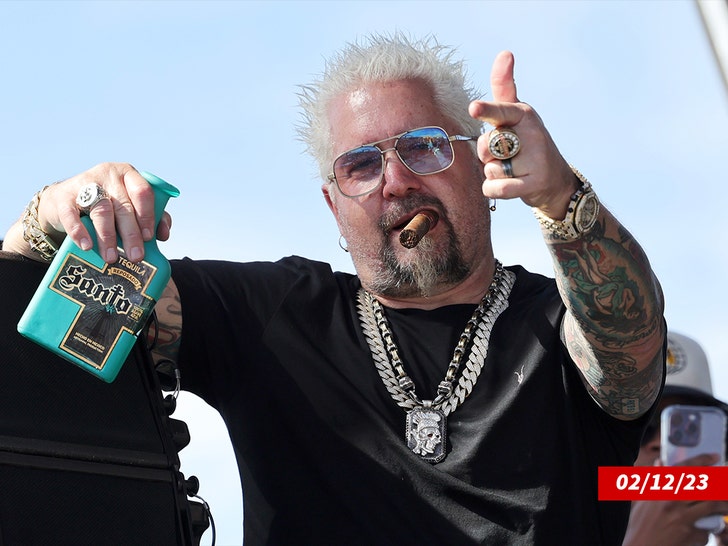
Controversy continues to follow Andrew Tate, and this time it involves an unexpected clash with celebrity chef Guy Fieri after a brief encounter at a recent UFC event turned into a viral moment—and then a public fallout.
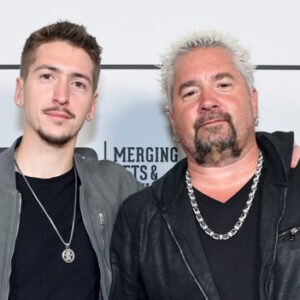
The situation began when Tate and his brother were spotted greeting Fieri at a UFC fight in April. The interaction itself appeared friendly and casual, with the two sides exchanging a quick acknowledgment in the crowd. However, once images and clips of the moment spread across social media, the reaction from fans was swift and critical. Many questioned why Fieri, a widely recognized and generally well-liked television personality, would be seen interacting with such a polarizing figure.

Facing mounting backlash, Fieri quickly addressed the situation. He claimed that he did not know Tate personally and did not support him, framing the interaction as a brief, unintentional encounter rather than a meaningful connection. This response, however, did not sit well with Tate.
When approached in Beverly Hills, Tate openly criticized Fieri’s reaction, accusing him of being inconsistent and inauthentic. According to Tate, the chef had no issue being friendly in person but changed his stance once public pressure intensified online. He portrayed this as an example of someone backing down to protect their public image rather than standing by their actions.
Tate’s comments escalated quickly, as he used harsh and offensive language while addressing the situation, including a racial slur—something that has drawn further criticism and added another layer of controversy. His remarks reinforced the perception many already have of him as someone who thrives on provocation and confrontation, particularly in the public sphere.
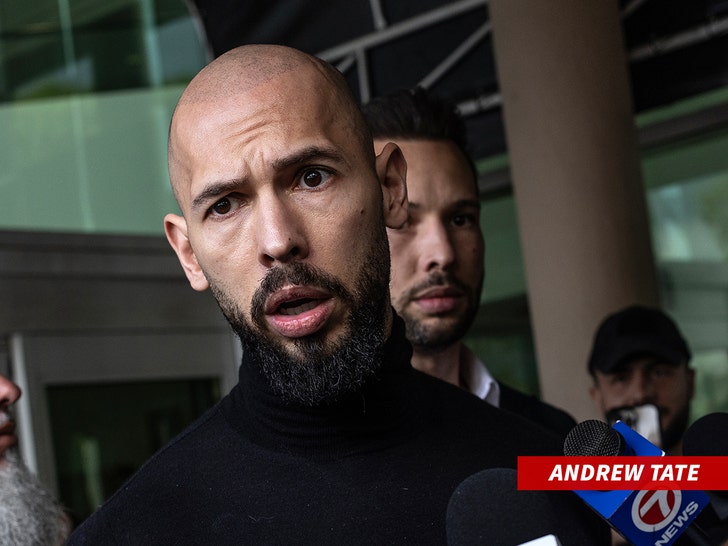
Beyond the specific conflict with Fieri, Tate also used the moment to push back against the idea that he lacks public support. He claimed that, contrary to the backlash seen online, he continues to receive positive reactions from people around the world. In his view, the criticism is largely confined to social media, while his real-world experiences tell a different story.
The incident also highlights a broader dynamic that often plays out in celebrity culture: the tension between private interactions and public perception. In high-profile environments like UFC events, it’s not unusual for celebrities to cross paths briefly without deeper connections. However, in today’s digital landscape, even a few seconds of interaction can be captured, shared, and scrutinized by millions—forcing public figures to respond quickly, sometimes defensively.
For Fieri, distancing himself may have been an attempt to maintain his brand and avoid being associated with controversy. For Tate, it became an opportunity to call out what he sees as performative behavior shaped by public opinion.
Adding to the complexity is Tate’s ongoing legal situation. He remains under investigation in Romania and the United Kingdom over serious allegations, including human trafficking and sexual assault, all of which he has denied. These cases continue to influence how he is perceived globally and contribute to the strong reactions whenever he appears alongside mainstream public figures.
In the end, what started as a brief, seemingly harmless moment at a sporting event has evolved into a larger debate about authenticity, public image, and the power of online backlash. It’s a reminder that in the age of viral content, even the smallest interactions can spiral into major controversies—especially when the individuals involved are already surrounded by intense public scrutiny.