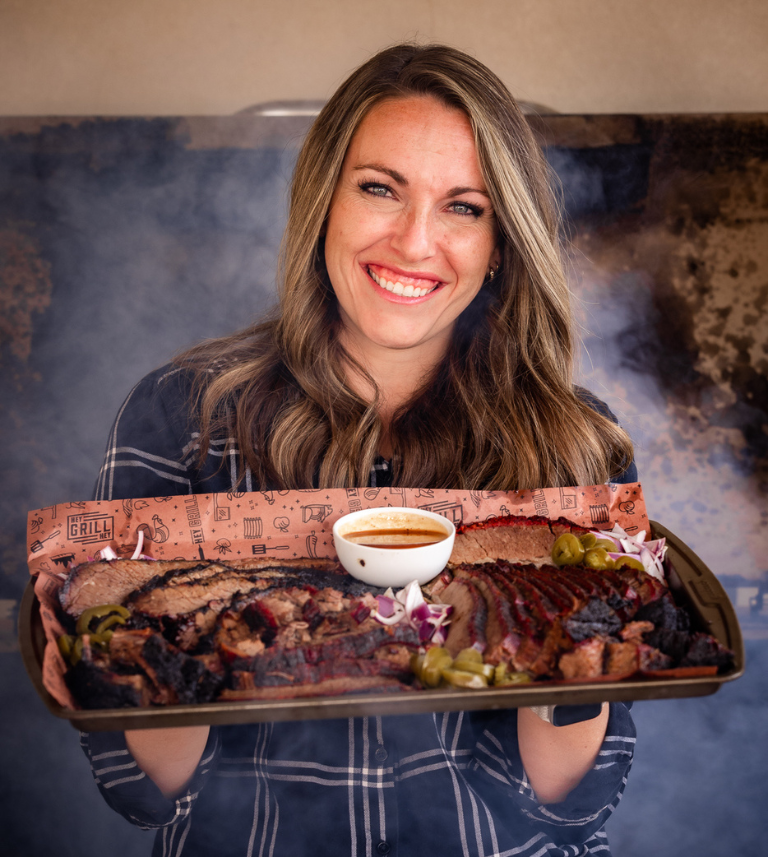
The intense BBQ showdown in the Utah highlands has officially begun, and the first episode of Food Network’s new competition “Pitmasters” delivered plenty of surprises, challenges, and unexpected struggles. The series brought together some of the country’s top barbecue cooks for a demanding live-fire cooking battle in a remote mountain location more than 5,000 feet above sea level. Among the competitors was Utah-based barbecue expert Susie Bulloch, founder of the popular online BBQ brand Hey Grill, Hey, who entered the competition with the advantage of competing close to home. However, even with her familiarity with the region, Bulloch and her team quickly discovered that the high-altitude environment could create serious obstacles.
The premiere episode placed the pitmasters in a remote area near St. George, Utah, where they faced their first major challenge: creating a family-style barbecue platter capable of feeding both the judges and their fellow competitors. The teams were given 10 hours to prepare two proteins and at least one side dish while building and managing their own barbecue setups in difficult outdoor conditions.
When the competitors arrived at the mountainous location, host Andrew Zimmern welcomed them to what he described as the “absolute middle of nowhere.” The area’s elevation was listed at 5,243 feet, creating a completely different cooking environment from the locations where many of the pitmasters usually work. The combination of thin air, unpredictable weather, and extended outdoor cooking conditions tested even the most experienced barbecue professionals.
While Bulloch had an advantage because she lived nearby and was already accustomed to Utah’s altitude, other competitors immediately struggled with the environment. Leslie Roark Scott, a barbecue veteran from a family with a long history in the craft, admitted that the elevation was taking a toll on her. At one point, she had to temporarily hand over control of the cooking process to her son, Jacob, while receiving help from a medical professional.
“This is not Mississippi,” Scott joked while dealing with the challenge of cooking at such a high elevation. She later explained that the altitude had affected her more than expected, making the physically demanding competition even harder.

For Bulloch, altitude sickness was not the main concern, but the combination of elevation and weather conditions still created problems during the cooking process. One of the biggest difficulties came when she and her teammate Christie Vanover struggled to raise the internal temperature of their candied pork belly. As the hours passed, they realized their dish was not progressing as planned, putting their final presentation at risk.
According to Bulloch’s own recap of the episode, Vanover made a crucial decision to use the Texas Crutch method, a barbecue technique that involves wrapping meat to help retain moisture and speed up cooking. That move turned out to be a major recovery step for the team.
Bulloch later explained that the decision may have been the reason the dish was able to reach the judges’ table at all. Without that adjustment, their pork belly may not have been ready in time for evaluation.
For their family-style barbecue platter, Bulloch and Vanover also prepared beef ribs, a green salad, and one of Bulloch’s signature dishes: smoked mac and cheese. Known for her approachable backyard barbecue style, Bulloch emphasized that her cooking philosophy focuses on food that people can realistically recreate at home rather than overly complicated restaurant-style dishes.
“I don’t do a ton of high-end chef-y food,” Bulloch said during the episode, explaining that much of her inspiration comes from the meals she grew up eating and the dishes she enjoys sharing with her family. She noted that although the competition placed them in an extreme situation, the goal was still to create food that everyday barbecue lovers could make themselves.
Her smoked mac and cheese has become one of her most recognized recipes online. Bulloch pointed out during the competition that her smoked mac and cheese recipe ranks among the top results on the internet when people search for that style of dish. For the challenge, however, she decided to prepare a smoked poblano shells and white cheddar version instead of simply repeating her most famous recipe.
After the 10-hour cooking period ended, all nine teams gathered to taste each other’s creations and receive evaluations from the expert judges. Bulloch joked that the experience felt like a regular family dinner because she was used to sharing food with large groups, especially as the youngest of six children.
The judges appreciated the creativity and different techniques used by Bulloch and Vanover, but they also noted that their dish was not the strongest overall. Despite having several impressive elements, the team’s performance was not enough to place them safely in the competition. They ended up among the bottom two teams alongside Leslie Roark Scott and her son Jacob, whose barbecue had strong flavor but suffered from undercooked chicken.
In the end, the judges determined that the competition was extremely close, but Scott and Jacob were eliminated after the first challenge. The victory went to Grecia and Esaul Ramos, a husband-and-wife team from Texas, who impressed the judges with their first-round performance.

Although Bulloch and Vanover survived the opening challenge, their difficult start showed that even experienced barbecue professionals can be pushed to their limits. The next episode raises the stakes even further, with the remaining eight teams being challenged to master three different live-fire cooking methods: preparing food underground, cooking directly on hot coals, and hanging food above the flames.
With unpredictable conditions, intense competition, and some of the best barbecue talents in the country, “Pitmasters” has already proven that success will require more than just great recipes. Adaptability, teamwork, and the ability to overcome unexpected problems may ultimately determine which team rises to the top.