The race for the title on America’s Culinary Cup is entering its most volatile phase yet—and for the first time all season, Buddha Lo is no longer standing alone at the top.

From the very beginning, Buddha has been widely viewed as the strongest contender of Season 1. His journey through the competition has been defined by remarkable consistency, technical precision, and an almost unshakable composure under pressure. Week after week, he delivered dishes that impressed the judges, rarely making significant mistakes and consistently landing in the upper tier of scoring. In a format built around strict “culinary commandments,” where each challenge tests a specific fine-dining principle, that level of control is incredibly difficult to maintain—and yet Buddha made it look routine.

But episode 9 may have marked a turning point.
In one of the most demanding challenges of the season, the chefs were tasked with showcasing world cuisine at a high level. The format was brutal: three hours to prepare three dishes—dumplings, rice, and noodles—each representing a different country. This wasn’t just about versatility; it was about mastery across multiple culinary traditions under intense time pressure.
And for the first time, Buddha didn’t dominate the narrative.
Instead, it was Chris Morgan who delivered a breakthrough performance that shook the competition. Scoring an impressive 298 points overall, including a perfect 120 on his noodle dish, Chris not only won the challenge but sent a clear message: he is no longer an underdog—he is a serious threat. The irony wasn’t lost on anyone, especially after he had previously been voted “least likely to win” by his fellow competitors.

Meanwhile, Buddha finished the challenge with 241 points, a solid score by any standard—but not enough to keep him ahead of the pack. For a chef who had spent most of the season setting the pace, this shift was significant. It wasn’t a collapse, but it was a signal that the gap between him and the others is rapidly closing.
The pressure is now very real.
Other competitors are also tightening the race. Matt Peters scored 263 points
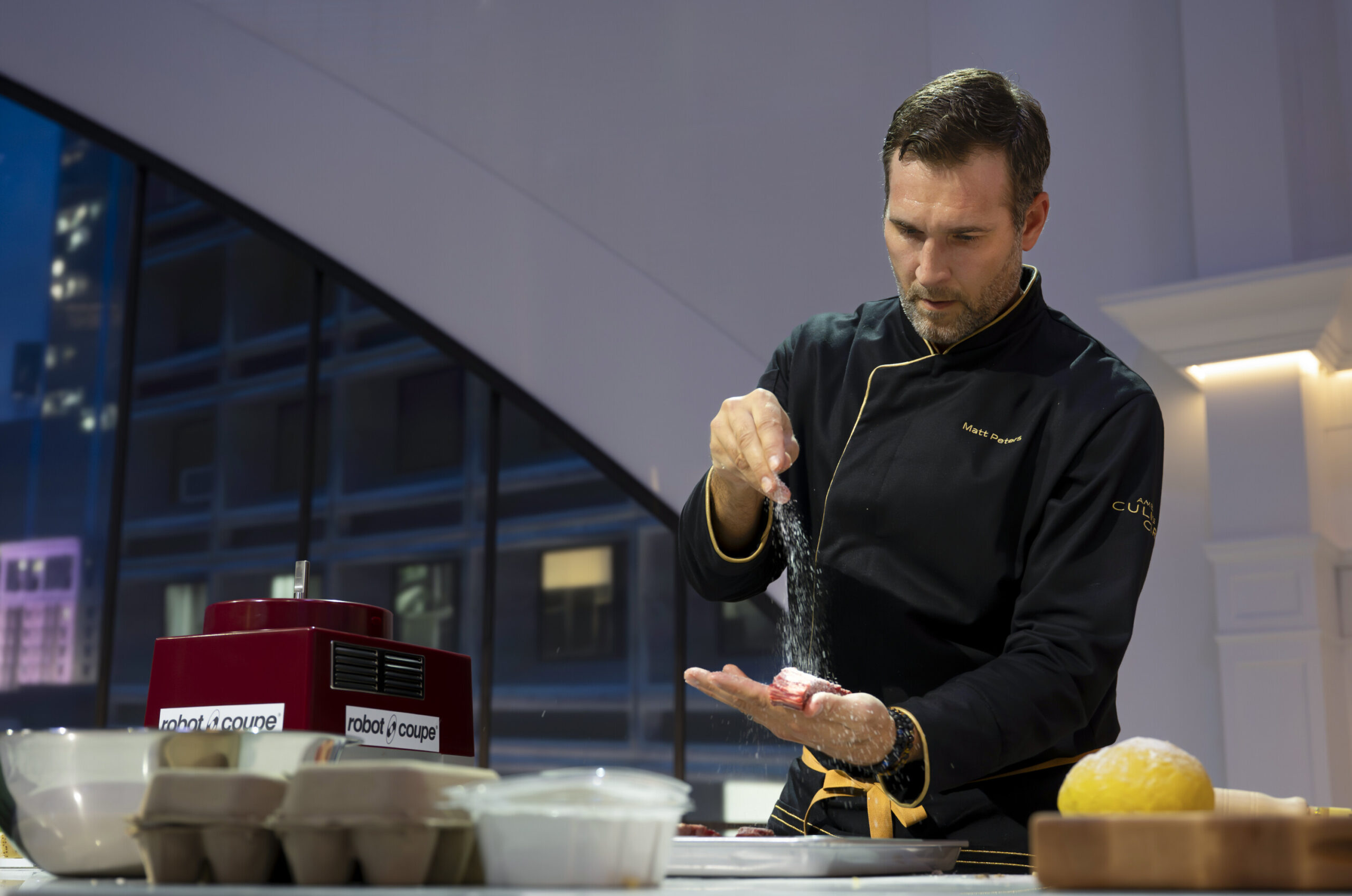
while Cara Stadler followed closely with 261 points, even leading earlier in the challenge after the dumpling round. The margins are shrinking, and at this level, even a small misstep can have major consequences.

For Buddha, the situation is now fundamentally different from earlier in the season. He is no longer the untouchable frontrunner cruising toward the finale. Instead, he finds himself in a tightly contested field where multiple chefs are capable of outperforming him on any given night.
And perhaps most importantly, the psychological dynamic has shifted.
Being the leader comes with pressure—but being chased is a different kind of challenge. Buddha must now adapt, not just maintaining his consistency but elevating his game to respond to increasingly aggressive competition. With rivals like Chris gaining momentum and others closing the gap, the margin for error has disappeared.
The road to the $1 million prize is no longer a solo run.
It’s a race—and it’s getting tighter by the minute.