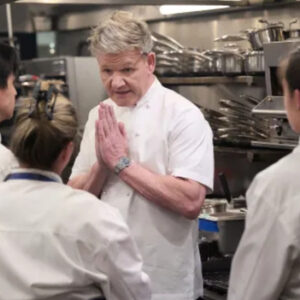
Gordon Ramsay faced controversy when he implemented a 20% service charge at his restaurants—significantly higher than the common 12.5%–15% in the United Kingdom. This decision quickly drew backlash from many customers, who argued the fee was excessive and unreasonable given rising prices. The 20% charge became the focal point, reigniting the debate about tipping culture and service value in the UK. Under public pressure, Ramsay spoke out to explain the issue, prompting a shift in public perception.

Celebrity chef Gordon Ramsay is once again at the center of debate—this time not for his fiery kitchen persona, but for introducing service charges as high as 20% at one of his London restaurants. The move has reignited a wider conversation about whether an American-style tipping culture is quietly taking hold in the UK dining scene.

Gordon Ramsay - Lucky Cat Restaurant

The controversy stems from Ramsay’s Asian-inspired restaurant, Lucky Cat, located inside the towering 22 Bishopsgate development in the City of London. Known for its luxury dining experience and panoramic skyline views, the venue recently applied a 20% “discretionary service charge” during special occasions such as Christmas and New Year’s Eve. This is notably higher than the typical 10% to 12.5% service charge most UK diners are accustomed to.

While Ramsay’s restaurants have historically leaned toward a 15% service charge, this jump to 20% places his establishments among the first in Britain to adopt a level more commonly associated with the United States. In American restaurants, tipping between 15% and 20% is standard practice, often forming a crucial part of service staff income due to lower base wages.

Lucky Cat menu

The introduction of such charges in the UK has not gone unnoticed. Critics argue that it signals a shift toward a more Americanized gratuity system—one that many British diners have traditionally resisted. Unlike in the US, where tipping is deeply ingrained and expected across a wide range of services, the UK has long maintained a more moderate and optional approach to gratuities.

What makes Ramsay’s move particularly striking is how it compares to his peers. Renowned chefs like Marco Pierre White and Raymond Blanc typically maintain service charges around 12.5%. Similarly, high-end establishments run by figures such as Heston Blumenthal and Rick Stein have largely stayed within that same range. Against this backdrop, a 20% charge stands out as both bold and controversial.

img alt

However, Ramsay’s decision does not exist in isolation. Across the UK, there are growing signs that tipping practices are evolving. Some upscale London restaurants have already moved toward 15% service charges, while certain hotels apply 20% fees for room service or large group bookings. Even more surprising to many is the emergence of service charges in pubs and bars—settings where tipping has historically been minimal or nonexistent.

For instance, some establishments in Scotland, operated by hospitality groups, have introduced small automatic charges on drinks ordered at the bar. While modest—around 2%—these fees reflect a broader cultural shift. In the US, tipping for each drink is standard, even without table service. For British customers, however, such practices can feel unfamiliar, even unwelcome.

Adding to the complexity, many restaurants are now incorporating optional charity donations into bills, typically small amounts like £1 or £2. These are often presented alongside service charges, creating a layered billing structure that some diners find confusing or excessive.

From a business perspective, the rise in service charges is closely tied to mounting financial pressures within the hospitality industry. Rising energy costs, increased food prices, and higher wages have all contributed to tighter margins for restaurants. Recent government policies, including higher employer National Insurance contributions and increases in the national living wage, have only intensified these challenges.

Industry leaders have been vocal about the strain. Prominent chefs and restaurateurs warn that without adjustments—whether through pricing, service charges, or other measures—many businesses may struggle to survive. Trade organizations echo these concerns, emphasizing that hospitality remains one of the most cost-burdened sectors in the economy.

Supporters of service charges argue that they play a vital role in supporting staff. In many cases, restaurants state that 100% of tips and discretionary charges go directly to employees, rewarding their work and helping to offset the industry’s financial pressures. From this perspective, higher service charges can be seen not as exploitation, but as a necessary adaptation.

Ramsay himself has described his 22 Bishopsgate project as the most ambitious of his career, reportedly investing tens of millions of pounds into the venture. The high-end dining complex, which has also been featured in a Netflix documentary about his life and work, represents a significant financial risk. By his own admission, the stakes are enormous.

Ultimately, the debate surrounding Ramsay’s 20% service charge reflects a broader cultural crossroads. As the UK hospitality industry evolves, it faces a delicate balance between maintaining traditional expectations and adapting to modern economic realities.

For diners, the question remains: is this a fair way to support staff and sustain businesses—or the beginning of a tipping culture many never asked for?


Related Posts

BROOKE WILLIAMSON LEAVES BOBBY FLAY SPEECHLESS — A SIMPLE DISH WINS OVER THE CULINARY LEGEND! In the world of fine dining, it is not easy to truly impress a chef as accomplished as Bobby Flay, especially with a dish rooted in simple, home-style cooking. Yet Brooke Williamson managed to do exactly that when she prepared a special menu for her longtime friend. What surprised Bobby was that the dish was neither overly elaborate nor flashy, but its flavors and unexpected combination completely won him over. The moment also offered a glimpse into why Brooke has been able to impress even some of the most demanding chefs in the culinary world.

In the competitive world of fine dining, even the most accomplished chefs can be surprised by a simple yet unforgettable dish. Bobby Flay, one of the most…

THE SCARIEST SIGN ON MASTERCHEF — WHEN GORDON RAMSAY SUDDENLY STOPS YELLING! MasterChef viewers are more than familiar with Gordon Ramsay shouting, glaring and putting contestants under intense pressure. But for the chefs stepping into that kitchen, the yelling may not actually be the most frightening part. Sometimes, the moment Gordon suddenly goes silent can be the clearest sign that things have gone far beyond the point of no return. No familiar shouting. No warnings. No explosive reaction — just one look from Gordon that can make the entire kitchen fall silent.

In the world of culinary reality television, audiences have become familiar with Gordon Ramsay’s explosive temper, powerful voice, and intimidating stares. His sharp criticism and intense kitchen…

HUNTER FIERI SURPRISES FANS AS HE TURNS 30 — GUY FIERI’S SON CHOOSES AN UNEXPECTED WAY TO CELEBRATE! When it comes to turning 30, many people imagine lavish parties, extravagant celebrations and a night to remember. But Hunter Fieri, Guy Fieri’s son, chose a completely different way to mark the milestone. Instead of flashy parties and a night surrounded by luxury, Hunter decided to make his 30th birthday a deeply personal milestone. His unexpected choice quickly left fans curious about how Hunter views life as he enters a brand-new decade.

When people imagine a major milestone like turning 30, they often think of elegant celebrations, luxury venues, and unforgettable moments filled with glamour. However, Hunter Fieri, the…

FORGET ABOUT ANY CHANGE OF HEART – HARRY AND MEGHAN IMMEDIATELY SHOW THEIR TRUE COLORS THE MOMENT THEY STEP FOOT BACK IN THE UK. William may have been completely right to worry about Harry and Meghan’s return after years of building a life in America. Initially, the duo claimed they were coming back with zero royal ties, leading the public to believe this homecoming was purely about raising their kids on British soil. But everything began to look different when Harry reportedly started asking King Charles to grant him a personal request. hat’s the exact moment everything they tried so hard to build completely crumbled…

When Prince Harry and Meghan Markle returned to Britain, they presented the move as a new chapter for their family. After years of building an independent life…

HERE IT IS — HARRY IS ALREADY ASKING KING CHARLES FOR HIS FIRST FAVOR AFTER RETURNING TO THE UK. Prince Harry and Meghan Markle are reportedly said to have made a personal request to King Charles III after returning to Britain with their children. After years of emphasizing their independence from the Royal Family, the Sussexes now appear to still need something that Hollywood cannot buy. And what they want King Charles to provide could be the key to understanding everything they truly need from this return…

When Prince Harry and Meghan Markle returned to Britain, they presented the move as a new chapter for their family. After years of building an independent life…

HARRY AND MEGHAN RETURN TO THE UK TO “PROTECT THEIR HAPPINESS” — BUT IT SEEMS THEY HAVE SOMETHING ELSE TO SHIELD FIRST. After walking away from Britain in search of freedom, the Sussexes are now back with a fresh game plan for their young family. Yet this time around, what keeps them up at night isn’t the palace walls or the ruthless press. A shift in their new life is forcing Harry and Meghan to brace themselves far more than they ever bargained for. According to insider leaks, the couple is even scrambling to draft a set of demands to safeguard what they fear losing the moment they step foot back on British soil.

Prince Harry and Meghan Markle’s return to the United Kingdom is being presented as a new beginning, but behind the scenes, the couple reportedly understands that this…