The United States is facing a dual crisis this week as the staggering financial toll of a new Middle Eastern war was laid bare just hours after the Supreme Court delivered a ruling that critics claim has left American democracy “hanging by a thread.”
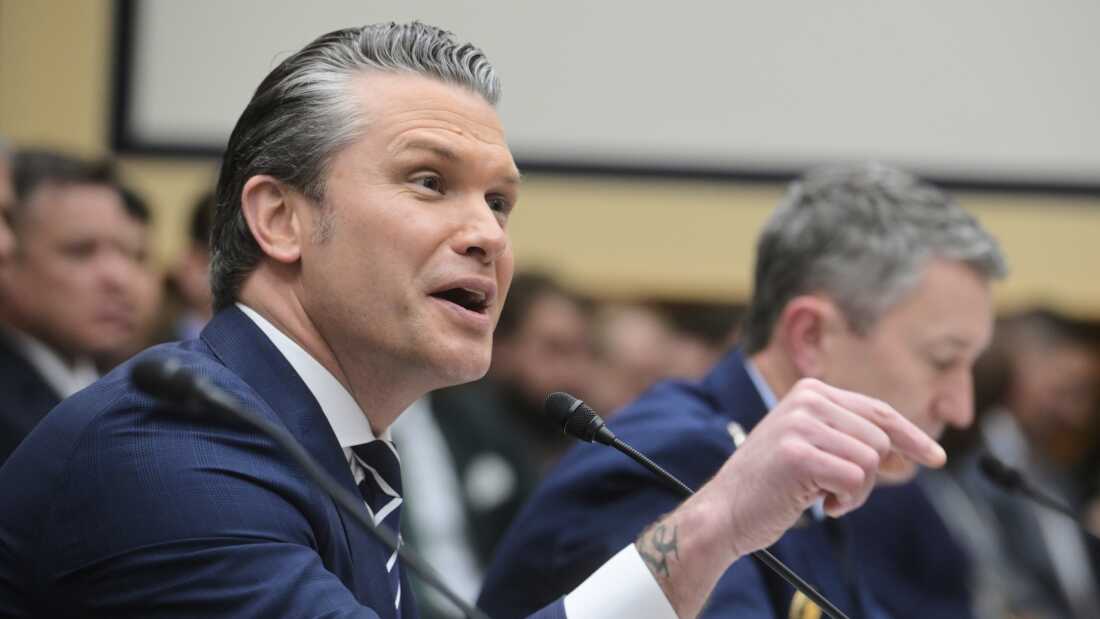
In a high-stakes hearing on Capitol Hill yesterday, Pentagon Comptroller Jay Hurst dropped a financial bombshell, confirming that the war in Iran has already drained a colossal $25 billion from the taxpayer coffers.
The figure, described by insiders as “merely the tip of the iceberg,” comes as the conflict enters a dangerous new phase of economic warfare. Defense Secretary Pete Hegseth, appearing alongside Hurst before the House Armed Services Committee, remained unapologetic and fiercely combative.
Refusing to offer any indication of when the boots on the ground might come home, a defiant Hegseth hailed the military operation as a “major success.” In a series of sharp exchanges, he turned his fire on “defeatist” Democrats, blasting those who questioned the mission’s mounting costs and lack of a clear exit strategy.
STRAIT OF HORMUZ STANDOFF
But while the rhetoric heats up in Washington, the reality on the water is even more perilous. The vital Strait of Hormuz remains at a total standstill, paralyzed by a dual blockade that has sent shockwaves through the global economy.
Military experts warn that neither Washington nor Tehran is prepared to budge. Retired Navy Vice Admiral Kevin Donegan warned that while the U.S. has the capability to maintain its blockade indefinitely, Iran is dug in for a “war of attrition,” utilizing a lethal cocktail of sea mines, kamikaze drones, and shore-based missiles to keep the waterway closed.
“It’s a game of chicken with global consequences,” one analyst noted. The U.S. Navy believes it can eventually clear the mines, but the process would be slow, dangerous, and require a further “weakening” of Iranian land forces—code for more airstrikes and more spending.

The economic pain is already being felt at home. Jet fuel prices in the U.S. have nearly doubled, creating a terrifying side effect: the cost of fighting summer wildfires is set to explode. Taxpayers are now expected to fork over an extra $100 million just to keep firefighting aircraft in the sky, a direct result of the chaos in the Middle East.
A BLOW TO THE BALLOT BOX
As the drums of war beat louder, a different kind of battle reached its climax at the Supreme Court. In a 6-3 split that fell strictly along partisan lines, the justices struck a devastating blow to the Voting Rights Act.
The Court ruled that Louisiana’s 2024 election map—which had created a second majority-Black congressional district—was an “unconstitutional racial gerrymander.” While the conservative majority claimed to keep the landmark 1965 law intact, legal experts say they have effectively “gutted” its power.
Justice Samuel Alito’s majority opinion shifted the goalposts for civil rights protections. No longer is it enough to prove that a map discriminates against minorities; plaintiffs must now prove “intentional” racism—a standard legal experts describe as nearly impossible to meet.
“They are asking for a smoking gun in a room full of shadows,” warned legal expert Atiba Ellis. The fallout is expected to be immediate and severe, with projections suggesting the U.S. could see the largest-ever decline in Black representation in Congress.

FED CHIEF DIGS IN
Adding to the sense of a capital in chaos, Federal Reserve Chairman Jerome Powell has sent a clear message to Mar-a-Lago: “I’m not leaving.”
In an unprecedented move, Powell announced he intends to remain on the Fed’s governing board through 2028, even after his term as Chairman expires next month. The decision is a direct challenge to President Trump, who has frequently threatened to fire the Fed chief and has seen his Department of Justice launch a criminal investigation into the central bank.
Powell, who says he wants to “safeguard” the Fed from political interference, has vowed to keep a low profile to avoid clashing with Trump’s nominee for the top job, Kevin Warsh. However, the move sets the stage for a constitutional showdown over the independence of the nation’s economy.
As the $25 billion war chest continues to empty and the legal foundations of the country shift, America finds itself at a crossroads. Between the fiery testimony of Pete Hegseth and the silent halls of the Supreme Court, the “staggering” cost of the last 24 hours is only just beginning to be calculated.