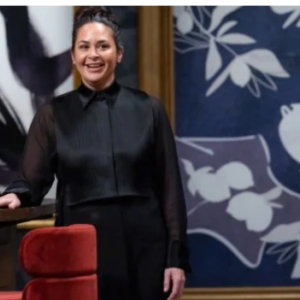
Food Network’s newest reality competition, “Bobby Flay’s The Line,” arrives with an ambitious concept that combines the pressure of a professional restaurant kitchen with the excitement of blind judging. The series brings viewers into a fast-paced culinary battle where chefs must work through intense service, prepare hundreds of dishes, and rely on real-time feedback from diners who have no idea which team created each plate.

At first glance, the show offers something fresh in the crowded world of cooking competitions. Rather than focusing only on individual dishes prepared under time limits, “Bobby Flay’s The Line” emphasizes the entire restaurant process — from preparation and organization to teamwork, communication, and the ability to adapt under pressure. However, despite its innovative format, a major concern has emerged: whether a late-game twist compromises the fairness of the competition.
The series can be described as a restaurant-focused version of Bobby Flay’s familiar competitive style, combining elements from several Food Network favorites. It carries the head-to-head energy of “Beat Bobby Flay,” the kitchen intensity of “Top Chef’s Restaurant Wars,” and the blind evaluation approach seen in competitions such as “Tournament of Champions.” The result is a format that feels different from many traditional cooking shows because the focus is not only on the final food product but also on everything happening behind the scenes.
Although Bobby Flay remains the central figure, the show surprisingly places more attention on the chefs and their kitchen operations rather than on Bobby himself. The competition does not feature Bobby’s usual group of elite chefs from “Bobby Flay’s Triple Threat,” and even his significant other, Brooke Williamson, does not appear as part of his team. Instead, Bobby works with a new group of chefs: Antonia Lofaso, Claudette Zepeda, and Michael Jenkins.
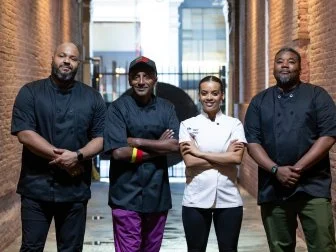
Together, Bobby and his team compete against another celebrity chef and their restaurant staff. In the premiere episode, the opposing team comes from Marcus Samuelsson’s Hav & Mar restaurant. Marcus is joined by executive chef Fariyal Abdullahi, Greg Pena, and Ed Brumfield, creating a battle between two teams that already understand the demands of working in a professional kitchen.

The structure of the competition is designed to recreate the pressure of restaurant service. After two hours of preparation, both teams must serve 240 plates to 40 diners within 90 minutes. Each diner receives 12 dishes in total, with six plates coming from each kitchen. Every dish can receive a score of up to five stars, creating a possible total of 1,200 points for each team.
One of the most unique aspects of “Bobby Flay’s The Line” is that the diners do not know who prepared their food. Their opinions are based only on the dishes in front of them, creating one of the largest blind judging systems used in a reality cooking competition. Unlike traditional formats where chefs prepare one dish and wait for the judges’ reactions, this show allows competitors to see average scores from diners while service is still happening.
That real-time feedback becomes the heart of the competition. The chefs are not simply judged after making mistakes — they have the opportunity to adjust and improve. Laurence Kretchmer, Bobby Flay’s business partner, works as the restaurant manager and communicates diner reactions back to the kitchens. This allows chefs to understand what is working and what needs to change during the service itself.
For example, when Bobby’s team notices that their tacos are receiving lower scores because of texture issues, Bobby is able to respond by changing the tacos from soft to crispy. The opposing team receives similar information, creating a competition where strategy and adaptation are just as important as cooking ability.
The show also captures the reality of restaurant teamwork. Because the chefs are working with people they already know, the atmosphere feels more natural and less forced. The friendly competition quickly turns into playful trash talk between the teams. Marcus Samuelsson jokes with Bobby about choosing Antonia Lofaso because she is the person who “talks the most,” while Antonia brings humor to the stressful environment when she explains that she struggles to read numbers while wearing her glasses during pasta preparation.
Beyond the competition, the series also highlights personal experiences within the restaurant industry. Fariyal Abdullahi discusses the challenges faced by women of color in the culinary world and explains that Marcus was one of the first chefs to support and empower her. These moments add emotional depth to a show otherwise dominated by speed and chaos.
The strongest part of “Bobby Flay’s The Line” is its focus on the process of restaurant work. Viewers see how orders move through a kitchen, how chefs communicate during service, and how quickly problems can develop. The series explains restaurant terminology and shows what happens when a kitchen becomes overwhelmed. Instead of simply watching chefs create beautiful dishes, audiences experience the pressure behind producing hundreds of meals.
However, the show’s biggest weakness comes from a special twist introduced near the end of the competition. A VIP guest arrives in the dining room, and both teams are required to create an entirely new dish for that table. The dish becomes a separate challenge, with the winning team receiving 10 additional bonus points.
While the twist adds drama, it also raises questions about whether the competition remains fair. In the premiere episode, Esther Choi awards her 10 bonus points to Bobby’s team, changing the final outcome. Marcus Samuelsson’s team originally scored 881 points, while Bobby’s team finished with 877. Without the bonus points, Marcus’ team would have won. Instead, Bobby’s team’s total increased to 887, giving them the victory.
The issue is that the bonus dish was not part of the main restaurant service. Unlike the other 240 plates judged by diners, this additional challenge could determine the winner despite being separate from the core competition. Because of that, the twist risks weakening the credibility of the format.
Ultimately, “Bobby Flay’s The Line” introduces a creative and engaging approach to cooking competitions. Its focus on teamwork, restaurant operations, and real-time feedback makes it stand out among other Food Network shows. However, the final twist creates a serious fairness concern that could affect how viewers view the competition. The series has the potential to be a strong addition to the culinary reality genre, but its success may depend on whether future episodes can balance entertainment with a truly fair competition.