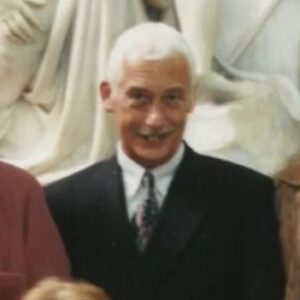
Ann Widdecombe, the former Conservative MP and minister who later became one of the most recognisable faces of Brexit politics, has died at the age of 78. Known throughout her long public career for her uncompromising opinions, strong Christian beliefs and famously direct personality, she remained a major figure in British public life for decades. From Westminster politics to reality television, she built a reputation as a politician who rarely softened her views, yet her life outside the spotlight contained a deeply personal choice she often spoke about with pride: she remained unmarried and chose a life of celibacy in dedication to her beliefs and public service.

Born on October 4, 1947, in Bath, Widdecombe was educated in Singapore and England before studying Latin at the University of Birmingham and later philosophy, politics and economics at Lady Margaret Hall, Oxford. Her political journey began long before she entered Parliament, starting as a councillor in Surrey in 1976. In 1987, she was elected as the Conservative MP for Maidstone, later Maidstone and The Weald, beginning a parliamentary career that would span more than two decades.
During the Conservative governments of John Major, Widdecombe rose through the ranks and held several ministerial roles, including Minister of State for Employment and later Minister of State for Prisons. Her time overseeing prisons was marked by her reputation for toughness and determination, with reports noting that she visited prisons across the country to understand conditions firsthand. She became known as a politician who preferred clear, firm positions rather than compromise, a style that earned her both devoted supporters and strong critics.
One of the most memorable moments of her political career came during the aftermath of prison escape investigations in 1997, when she famously said there was “something of the night” about then-Home Secretary Michael Howard. The remark became one of the defining political comments of the era and contributed to the challenges surrounding Howard’s later leadership ambitions. Widdecombe herself attempted to run for Conservative Party leader in 2001 but failed to gain enough support from fellow MPs, with Iain Duncan Smith eventually winning the contest.
Beyond her political identity, Widdecombe was deeply shaped by her religious convictions. A lifelong Christian, she made the controversial decision to leave the Church of England and convert to Roman Catholicism in 1993 after the Church voted to allow the ordination of women as priests. Her faith influenced many of her political positions, particularly on issues such as abortion, same-sex marriage and social values. She was widely regarded as a socially conservative figure and remained committed to defending the principles she believed in, even when those views attracted criticism.

Her personal life was always a subject of public curiosity. Widdecombe never married and never had children, describing herself proudly as a “spinster.” She acknowledged having had a relationship during her time at Oxford, but ultimately chose to prioritise her career and public responsibilities. She often presented her decision not to marry as a conscious choice rather than something she regretted, explaining that her life had been devoted to her work, faith and causes she supported.
Although she spent much of her life associated with serious political debates, Widdecombe later became famous for an entirely different reason. In 2010, she surprised the nation by joining the cast of BBC’s Strictly Come Dancing. Paired with professional dancer Anton Du Beke, she quickly became one of the show’s most entertaining contestants. Despite receiving extremely low scores from judges and being famously criticised for her dancing ability, she remained in the competition until the tenth week and finished in sixth place.
Her performances transformed her image among the wider public. While many people disagreed with her political views, audiences embraced her eccentric personality, humour and determination. Judges described her routines with unforgettable comparisons, including calling her dancing similar to “a Dalek in drag,” but viewers continued supporting her because of her charm and willingness to laugh at herself. Her popularity on the show helped introduce her to a younger generation who knew her less as a politician and more as a television personality.
Widdecombe later appeared on Celebrity Big Brother in 2018, where she again became a major talking point. Her outspoken views created disagreements with other housemates, particularly over comments related to LGBT issues, but she finished the series as runner-up. She also appeared in documentaries, hosted episodes of Have I Got News For You, wrote novels and even performed in pantomime productions, including playing the Evil Queen in Snow White and the Seven Dwarfs.
Politically, Widdecombe’s final years were defined by Brexit. A passionate Eurosceptic, she became increasingly critical of the Conservative Party’s handling of Britain’s departure from the European Union. In 2019, after Theresa May’s government failed to deliver a Brexit deal she supported, she left the Conservatives and joined Nigel Farage’s Brexit Party. She was elected as a Member of the European Parliament and later became associated with Reform UK, continuing to campaign alongside Farage.
Her Brexit career brought some of her most controversial moments, including her comparison of Brexit supporters to slaves rising against their owners during her first speech as an MEP. Supporters viewed her as a fearless defender of national independence, while critics accused her of using extreme language.
Nigel Farage described Widdecombe as an “absolute force of nature,” praising her loyalty and saying that although she sometimes disagreed with Reform UK policies privately, she remained a committed ally in public. Conservative leader Kemi Badenoch also paid tribute, describing her as a formidable politician who was always true to herself.
Until shortly before her death, Widdecombe remained active in public life, writing opinion pieces, appearing on television and supporting Reform UK campaigns. She continued speaking about politics, faith and society with the same confidence that defined her entire career.

Ann Widdecombe leaves behind a complicated legacy: a politician admired by supporters for her honesty and determination, criticised by opponents for her conservative views, and remembered by millions for her unexpected transformation into a television favourite. Behind the strong public image of the outspoken politician was a woman who made deliberate personal choices, dedicating her life to faith, politics and service rather than traditional family life.