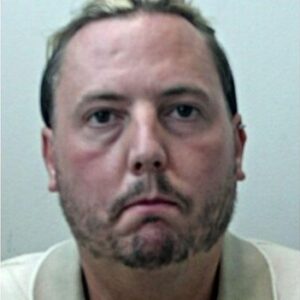
Mohamed Samak, a former Egyptian international field hockey player and coach at Malvern College, has been sentenced to a minimum of 21 years in prison for the murder of his wife, Joanne Samak, a respected interior designer. The 44-year-old had originally attempted to convince investigators that Joanne had taken her own life after suffering from stress and personal struggles. However, forensic evidence and the details uncovered during the investigation revealed a very different version of events, exposing his attempt to hide the truth behind his wife’s death.

Newly released police interview footage shows the moment Samak became emotional while speaking with detectives after Joanne was found fatally injured at their home in Droitwich Spa, Worcestershire, in the early hours of July 1, 2024. During questioning, he repeatedly claimed that his wife had stabbed herself, describing a scene in which she allegedly picked up a knife and inflicted injuries on her own body.
In the interview, Samak broke down in tears as he told officers that Joanne had supposedly said she had “had enough of life” and was overwhelmed by stress. He claimed she had been upset about problems around the house and was struggling emotionally before the incident. According to his account, he woke up after hearing a scream, walked onto the landing, and saw his wife in a corner of the room holding a knife.
When detectives asked him to explain exactly what had happened, Samak struggled to provide clear answers. He told officers that he had seen Joanne with the knife and that she had pushed him away while saying she wanted to be left alone. He insisted that he had not caused her injuries and suggested that she had harmed herself.
However, investigators later determined that his explanation did not match the evidence. Samak was eventually convicted of murder after a retrial in October, following an earlier trial where the jury was unable to reach a verdict. Prosecutors argued that he killed Joanne because of financial pressures and because he had developed an interest in another woman.

The court heard that Joanne, 49, had been the main source of income in the household while Samak struggled to secure permanent employment. Their marriage had experienced difficulties for years, and the couple had been sleeping in separate bedrooms while living almost separate lives. Samak admitted that he missed the romance they once shared and had reconnected with a woman he had met in France years earlier. He admitted meeting her in London and sharing a kiss, although he had not told Joanne about the encounter.
Meanwhile, Joanne had privately expressed unhappiness about the relationship, telling a friend that she no longer loved her husband and wished she could divorce him. Despite this, those close to her said they had no concerns that she was suffering from severe mental health problems or that she was planning to harm herself. Friends and family described her as someone who had future plans, including starting a new job and preparing to celebrate her 50th birthday.
The prosecution presented evidence that strongly contradicted Samak’s claim of suicide. Joanne suffered six stab wounds to her chest and abdomen, with some injuries reaching depths of up to 10 centimeters. Medical experts told the court that significant force would have been required to cause the wounds, particularly one injury that penetrated her breastbone. They said it was extremely unlikely that she could have inflicted those injuries on herself.
Further evidence also linked Samak to the crime. Joanne’s blood was discovered on clothing that he had hidden in the loft of their home. The court also heard that after discovering his wife injured, Samak waited more than an hour before contacting emergency services. When he finally called 999 at around 4:10am, he gave a different explanation, claiming he had found Joanne collapsed on the bed with a knife in her stomach.

Emergency operators instructed him to perform CPR, but Samak admitted that he did not attempt to save her, despite having first-aid training and access to medical supplies. Prosecutors argued that his actions after the attack showed that he was trying to protect himself rather than help his dying wife.
During the trial, Samak maintained that Joanne had taken her own life and suggested she had been affected by alcohol and emotional difficulties. However, people who knew her rejected that portrayal, saying they had never seen signs that she was in such a state of mind.
Judge James Burbidge KC condemned Samak’s actions, describing them as “wicked beyond comprehension” and saying that he had devastated Joanne’s family and destroyed the life of a woman who was loved by many. Joanne’s mother, Penny Vale, told the court that her family would never recover from losing someone who was “irreplaceable.” Her brother Mark Vale described her death as unexpected, sudden, violent, and unbearably cruel.
Samak, who had represented Egypt in field hockey and later worked as a coach at the prestigious Malvern College and with Wales under-18s, will serve at least 21 years in prison, with the time he has already spent on remand deducted from his sentence. A parole board will only consider his release after he completes the minimum term.

The case has highlighted how Samak’s initial explanation of his wife’s death collapsed under the weight of forensic evidence, witness testimony, and inconsistencies in his own account. What he presented as a tragic suicide was ultimately proven in court to be a deliberate act of violence against his wife.