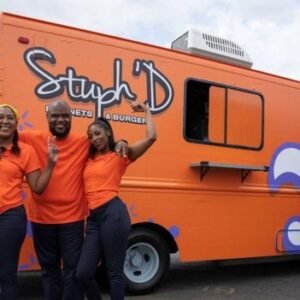
With a grand prize of up to $50,000 at stake, Season 19 of The Great Food Truck Race began its journey in Nashville, bringing together eight teams ready to compete in a high-pressure culinary challenge. Among the contestants was Stuph’d Beignets & Burgers, a New Orleans family team that entered the competition with a unique disadvantage: they had never operated a food truck before. Although they had spent years building a successful restaurant business, transitioning from a traditional kitchen to the tight, unpredictable environment of a mobile food truck created a completely new challenge. Their experience quickly became a story of adaptation, determination, and learning under pressure.
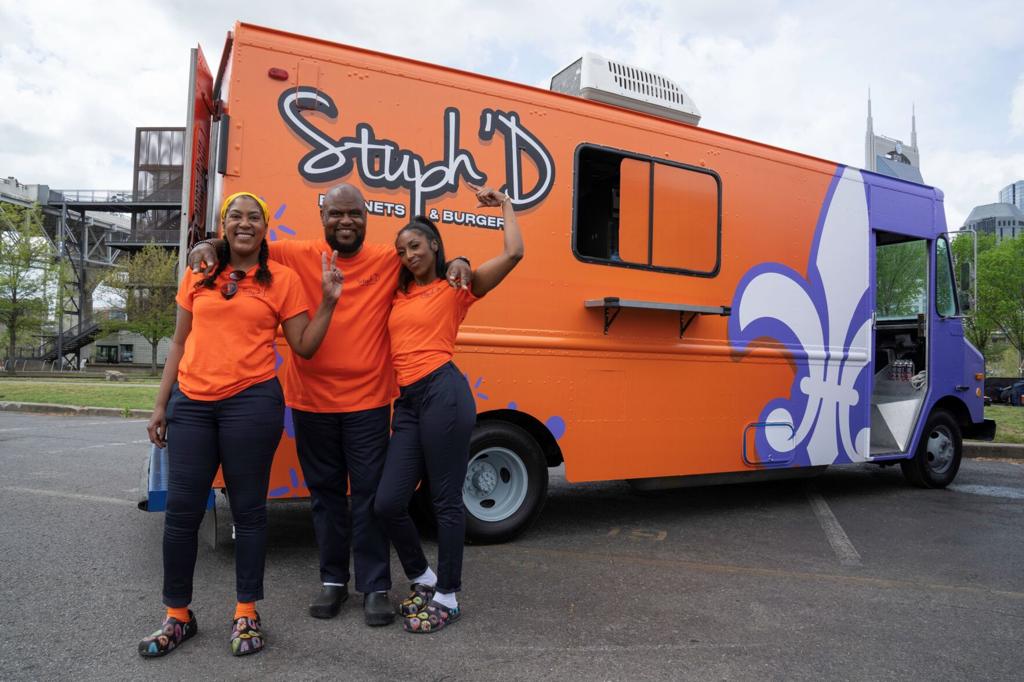
The Stuph’d team, made up of Duana Lawrence, her daughter Dionne Lewis, and Lewis’ father Sherman Clarke, represented New Orleans with a menu inspired by the flavors and creativity of their hometown. Before joining The Great Food Truck Race, the family had spent nearly a decade running their restaurant on St. Claude Avenue. Their business had earned attention for its creative approach to classic New Orleans favorites, especially their signature stuffed beignets and burgers.
However, owning a restaurant and running a food truck are two very different experiences. In a restaurant, chefs have a familiar space, established routines, and a controlled environment. A food truck requires speed, flexibility, teamwork, and the ability to make quick decisions while dealing with limited space and constantly changing conditions. For Stuph’d Beignets & Burgers, every day of the competition became a crash course in a completely new way of cooking and selling food.
The opportunity to compete came after the show’s casting team discovered the restaurant through a positive social media review. Impressed by their creative menu and unique concept, producers invited the family to take part in the 19th season of the Food Network series. Despite their lack of food truck experience, the team accepted the challenge and stepped into the competition ready to prove that passion and determination could compete with years of experience.
Their restaurant had already developed a loyal following thanks to its distinctive menu. Customers could enjoy traditional beignets as well as creative stuffed versions featuring flavors such as Oreo, sweet potato pie, and praline cheesecake. The team also offered savory beignets filled with options like vegetables, barbecue beef, and surf and turf combinations. Their burgers followed the same philosophy, going beyond the ordinary with fillings such as cheddar and jalapeños, hot sausage, and shrimp.
According to Sherman Clarke, the defining feature of their burgers was the “stuffed” concept that made each creation different from a typical burger. That creativity became the foundation of their identity during the competition, giving them a way to stand out among teams from across the country.
The Great Food Truck Race brought together competitors with a wide range of food specialties. Along with Stuph’d Beignets & Burgers, the season featured teams including Bug & Bear’s Cannoli from Los Angeles, Cason Funnel Cakes from Richmond, Deadproof Pizza Co. from New Hampshire, Grounds Donut House from New York, Hele Rolls from Hawaii, Jollof Bowl from Baltimore, and Waffadilla from Hampshire, Illinois. Each team arrived with its own story, flavors, and ambitions, but all faced the same challenge: proving they could handle the demands of life on the road while competing for the final prize.
For the Stuph’d team, the experience was both exhausting and rewarding. Dionne Lewis, a Louisiana State University graduate, described the competition as a journey filled with lessons and unforgettable moments. Although the pressure was intense, she explained that the experience showed the family how much they could accomplish when they worked together toward a common goal.
The competition also provided valuable lessons from host Tyler Florence, a longtime food personality and restaurateur. Through the challenges, Florence helped the contestants understand the importance of professional cooking techniques, presentation, and strategic thinking. For Lewis, one of the biggest takeaways was learning the importance of balancing textures, colors, and overall food presentation. Concepts that had once seemed minor became essential parts of creating successful dishes in a competitive environment.
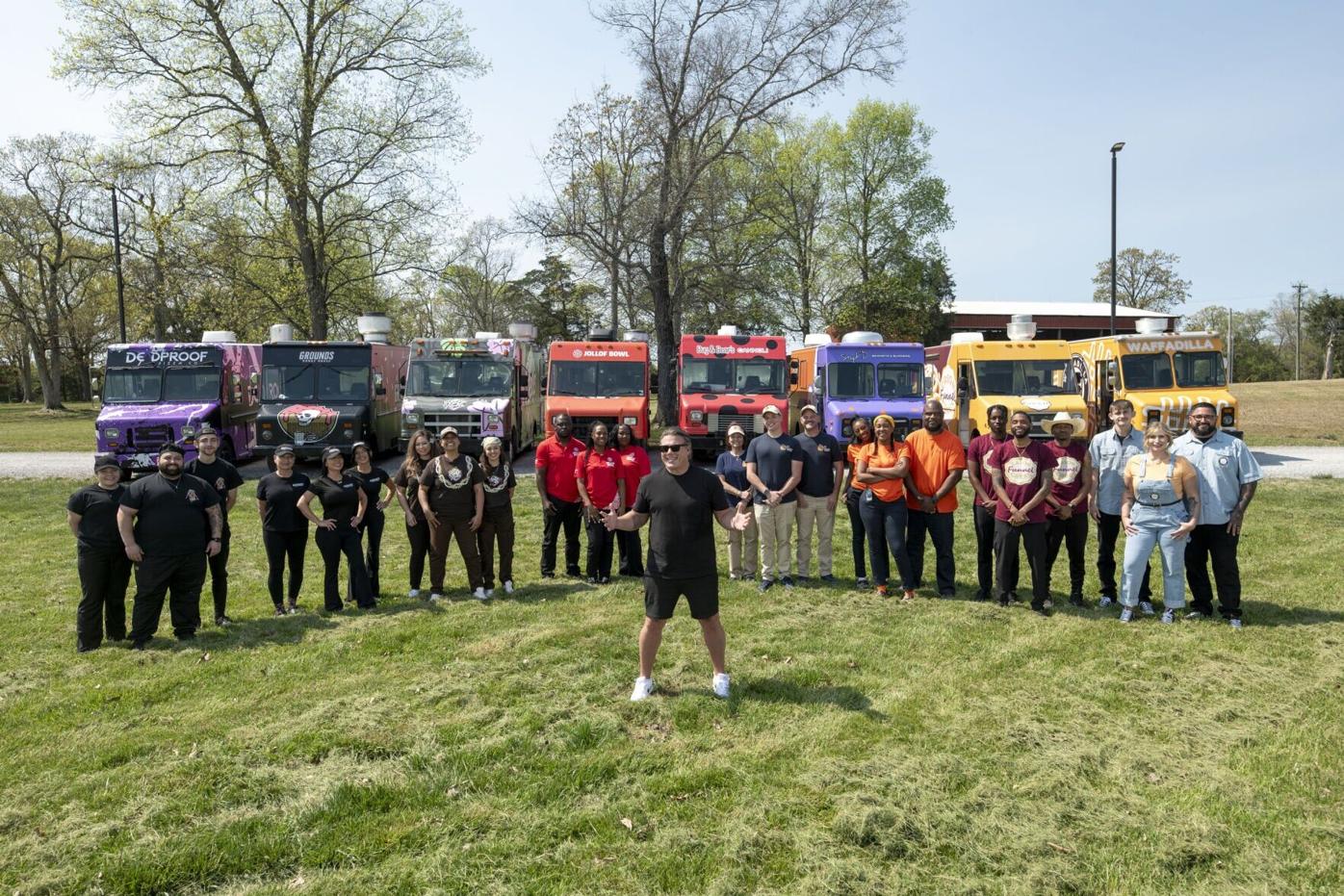
Beyond the cooking challenges, the team also had to master marketing, customer interaction, and sales strategies. The Great Food Truck Race is not only about making great food; contestants must attract customers, manage their resources, and make smart decisions under time constraints. Every stop on the journey through Nashville and the Great Smoky Mountains tested their ability to adapt and improve.
For Stuph’d Beignets & Burgers, entering the competition without food truck experience could have been seen as a weakness. Instead, it became part of their story. Their willingness to learn, their strong family connection, and their commitment to sharing New Orleans flavors helped them transform an unfamiliar challenge into an opportunity. What began as a step into unknown territory became a memorable adventure filled with growth, teamwork, and the chance to showcase their unique culinary style to a national audience.