It is hard to believe that Meghan Markle’s decision to deliberately wear Princess Diana’s jewelry and become a focal point at David Foster’s event was merely a coincidence with no careful planning behind it. After all, Foster has long held deep affection and admiration for Princess Diana and has been described as a second father figure to Harry. It almost seems as though Meghan wanted to send the world a familiar message: that even years after leaving royal life, she still sees herself as carrying Diana’s legacy — echoing the comparisons Harry himself has drawn between the two women. However, according to some interpretations, the Duchess’s real purpose in returning to the red carpet may never have been simply about making a statement.

The important distinction is that there is no evidence Meghan deliberately chose Diana’s earrings to manipulate Foster, manufacture headlines, or orchestrate the attention surrounding the evening. But as an exercise in analyzing public image and symbolism, the combination of circumstances is undeniably striking.

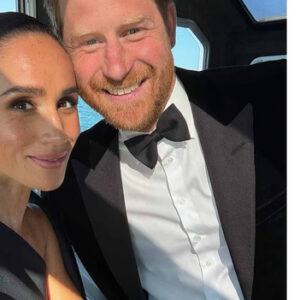
Meghan could have selected countless pieces of jewelry for the 40th anniversary celebration of the David Foster Foundation in Victoria, British Columbia. Instead, she appeared in her black one-shouldered Greta Constantine gown wearing Diana’s diamond and sapphire earrings, styling her hair in an updo that made the stones particularly visible.
That choice carried meaning before Meghan even said a word.
Diana remains inseparable from Harry’s public identity. For Meghan, wearing something that belonged to her late mother-in-law creates an immediate visual connection to the royal past she and Harry officially left behind years ago.
But the location and the host made the symbolism even more interesting.
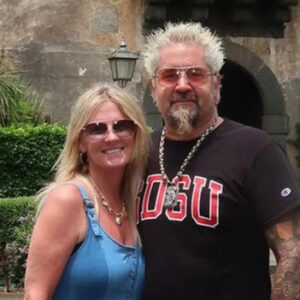
David Foster is not simply another celebrity acquaintance of the Sussexes. He played a meaningful role during one of the most dramatic transitional periods of their lives. In 2019, Foster helped arrange for Harry and Meghan to stay at a secluded waterfront mansion belonging to a friend on Vancouver Island.

Foster later said he felt “honored” to have helped them.
His wife, Katharine McPhee, subsequently described the relationship between Foster and Harry in even more intimate terms.
“They’re so cute. They’re like father and son,” she said in 2020.

Sources close to Foster also emphasized his admiration for Diana when explaining the supposedly awkward red-carpet encounter with Meghan. One insider insisted that Foster would never deliberately snub the couple, partly because “he’s always been a big fan of Diana.”
And that is where the Diana earrings become difficult to ignore as a piece of visual storytelling.
Here was Harry standing beside a man portrayed almost as a surrogate father figure. Here was Meghan standing beside Harry wearing jewelry belonging to Harry’s actual mother. And all of this was happening in Canada, the country that had provided the Sussexes with a temporary refuge during their transition away from royal life.
Whether intentional or not, the imagery practically constructed its own narrative.
One interpretation is that Meghan was subtly reinforcing continuity.
The Sussexes may have abandoned their former royal roles, but Diana remains a connection to royal history that cannot be removed by geography, titles or institutional separation. Wearing Diana’s jewelry reminds audiences that Harry remains Diana’s son and Meghan possesses a deeply personal connection to that inheritance through her husband.

In that sense, the earrings can function almost like visual shorthand.
Meghan does not need to make a speech about Diana. The jewelry makes the association for her.
There is, however, a more skeptical interpretation.
Critics could argue that Meghan understands perfectly well how much media attention Diana’s jewelry generates and therefore knows that wearing such pieces virtually guarantees additional coverage. Every photograph of the earrings invites another mention of Diana, which inevitably places Meghan back inside the royal narrative.
That does not prove manipulation. Public figures routinely understand the symbolic power of clothing and jewelry, and choosing an heirloom for an important occasion can simultaneously be personal, sentimental and image-conscious.

The distinction matters because speculation becomes misleading when it is presented as established motive.
Ironically, the supposed David Foster “snub” complicated whatever message Meghan’s appearance might otherwise have communicated.
A viral clip showed Meghan smiling and extending her arm toward Foster, only for him to apparently walk past her. Meghan quickly withdrew her hand and adjusted herself before the group photograph continued.
For a few seconds, the symbolic narrative appeared almost inverted. Meghan was wearing Diana’s jewelry in front of a man known to admire Diana, yet that same man appeared not to acknowledge her.
Foster’s side subsequently offered a much less dramatic explanation.
According to insiders, he “genuinely just didn’t see” Meghan. They said Foster had already greeted Harry and Meghan, exchanged hugs with them and introduced them to members of his family before the viral moment. As host, he was also juggling interviews and other responsibilities.
Inside the gala, Harry and Meghan were seated beside Foster and McPhee, further undermining the idea that the clip demonstrated some major rupture in their friendship.
This creates perhaps the most revealing lesson of the evening.
In celebrity culture, intention and interpretation are two entirely different things.
Meghan may have worn Diana’s earrings because they were personally meaningful. She may have understood their public symbolism. Both things could even be true simultaneously. What cannot responsibly be claimed without evidence is that she devised some elaborate plan involving Foster or deliberately engineered the evening around Diana.
Yet the fact that such theories emerge so easily illustrates the unusual power Diana still possesses within the Sussex story.
Decades after her death, one pair of earrings can instantly connect Harry’s mother, Meghan’s public identity, Foster’s admiration for Diana, the Sussexes’ Canadian history and their complicated relationship with royal life.
Perhaps that is the real significance of Meghan’s choice.
Whatever her private intention, she stepped onto that red carpet wearing something that ensured Diana would symbolically enter the room with her. And when a public figure understands the extraordinary power of symbolism, the boundary between a sentimental choice and strategic image-making will inevitably remain open to interpretation.