One of the more unique contestants to appear on Food Network’s new hit competition 100 Cooks is Sruly Meyer, an Orthodox Jewish home cook who entered the competition with goals that extended far beyond winning a cash prize.
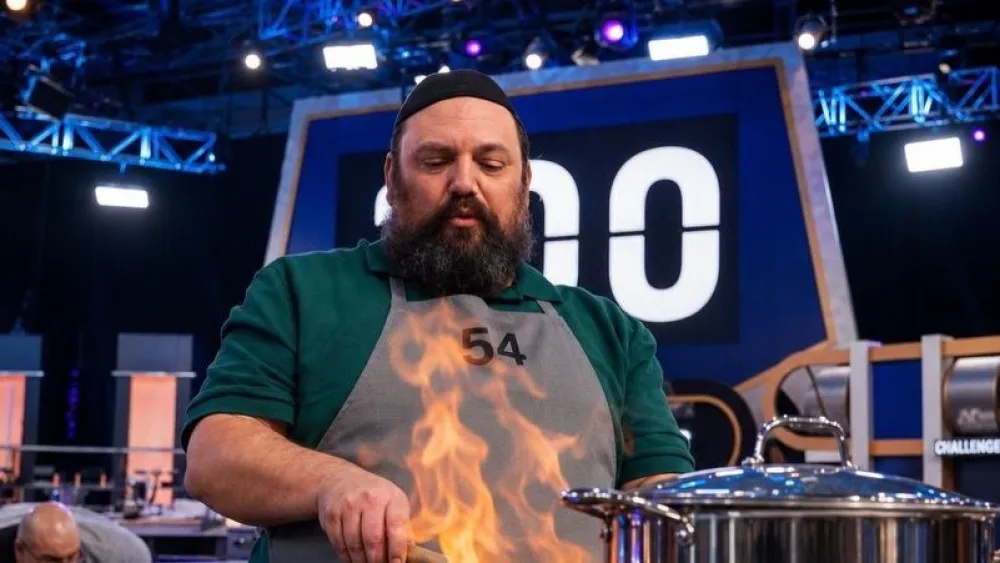
Meyer, a 48-year-old kosher food marketer and content creator from California, recently opened up about his experience on the show, revealing the unusual challenges he faced before ever stepping into the kitchen.
Like many food lovers, Meyer had spent years watching popular Food Network series such as Chopped and Beat Bobby Flay, imagining what it would be like to compete on national television. When producers for 100 Cooks reached out after seeing his social media content, he saw an opportunity he couldn’t ignore.
But before accepting, Meyer needed answers to a question most contestants never have to ask:
Could an Orthodox Jew even participate in a mainstream cooking competition?
Because Meyer strictly observes kosher dietary laws, he sought guidance from multiple rabbis before signing on.

The concerns were significant.
He would be cooking in shared kitchens.
He could not taste non-kosher ingredients.
He could not prepare certain combinations of foods forbidden under Jewish law.
And he wanted to avoid creating confusion among viewers who might mistakenly assume everything on the show was kosher simply because an observant Jewish contestant was participating.
After consulting religious authorities, Meyer was told that participation was permissible under specific conditions. He could use equipment that had been kosher-certified, but he could not personally taste any non-kosher food. He also hoped the show would make his dietary restrictions clear to viewers.
That wasn’t the only challenge.
Meyer also observes shomer negiah, a traditional Jewish practice that prohibits physical contact with members of the opposite sex outside immediate family. To avoid awkward situations during filming, he informed producers ahead of time that he would not shake hands or engage in casual physical greetings with female contestants or judges.
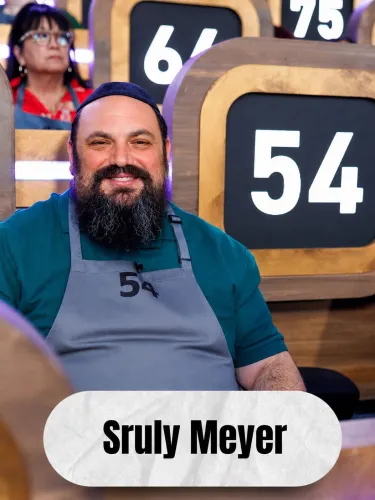
The production team reportedly worked with him to ensure those boundaries were respected.
Despite concerns about standing out, Meyer said he was determined to present himself authentically.
Rather than hiding his religious identity, he deliberately chose several different yarmulkes (kippahs) to wear during filming.
According to Meyer, authenticity was important not only for himself but for the broader Jewish community he knew would be watching.
In fact, one of his biggest motivations for joining 100 Cooks was to create what Jewish tradition calls a Kiddush Hashem — bringing honor and positive representation to the faith through one’s actions.
That mission became even more meaningful given the current climate of rising antisemitism.
Meyer admitted he worried before filming that viewers or fellow contestants might judge him negatively because of his religion. Instead, he found the opposite experience.
One of the contestants he bonded with most closely was a Lebanese chef. The two discovered common ground through their shared familiarity with Middle Eastern ingredients, spices, and cooking traditions.
For Meyer, the friendship reinforced an idea he strongly believes in:
Cooking brings people together in ways politics often cannot.
When his moment finally arrived in the competition, Meyer faced a challenge requiring contestants to prepare a pasta dish in just 30 minutes.
The time limit immediately ruled out making fresh pasta from scratch.
He also decided against preparing a meat-based dish because many contestants were incorporating dairy ingredients such as butter, creating combinations he would never personally cook or eat.
Instead, Meyer leaned into seafood and created a Salmon Penne Vodka dish.
He chose to mix the salmon throughout the pasta rather than serving large pieces on top, aiming for balance and consistency in every bite.
The judges responded positively.
While Meyer ultimately did not advance deep into the competition or take home any prize money, he described the experience as a success.
More importantly, he believes the appearance introduced many viewers to aspects of Orthodox Jewish life they may never have encountered before.
Several contestants reportedly approached him after filming with questions about Judaism and his religious practices. Others commented that they admired how calm and composed he remained under pressure.
Today, Meyer continues working in kosher food marketing and restaurant consulting while growing his social media audience. He currently advises kosher restaurants across the United States and remains active in food content creation.
And after finally achieving his dream of appearing on Food Network, he says he hopes it won’t be his last television cooking competition.
For many viewers, Meyer’s appearance may simply have been another contestant chasing culinary success.
For him, however, 100 Cooks became something much larger: an opportunity to showcase his cooking skills, represent his faith, and prove that staying true to one’s identity can be just as important as winning the competition itself.