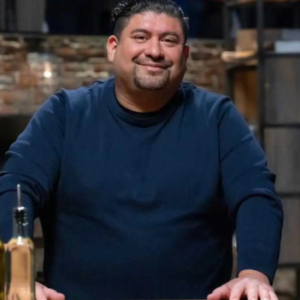
On his 50th birthday, Bryan Voltaggio finally achieved what had long eluded him: a decisive first-place finish on Tournament of Champions Season 7. It was a moment years in the making — one shaped by near-misses, second-place finishes, and the weight of expectations that had followed him since his early days on Top Chef.

For much of his competitive career, Voltaggio had become synonymous with “almost.” In 2009, he famously finished runner-up on Top Chef: Las Vegas, losing to his brother, Michael Voltaggio. More recently, he fell short again in 24 in 24: Last Chef Standing, where Jonathon Sawyer claimed the win. Even on Tournament of Champions, his track record was far from dominant — with two early first-round eliminations that cast doubt on whether he could ever conquer the format.

But Season 7 told a different story.
Filmed shortly after the holiday season — and following his win alongside Michael in Tournament of Champions: All-Star Christmas — Voltaggio entered the competition with both momentum and pressure. That previous victory, while significant, was shared with his brother. This time, the goal was clear: a solo win to finally define his own legacy.
When the finale aired, the moment was as personal as it was historic. Surrounded by family and friends — with Michael by his side — Voltaggio celebrated not just a championship, but a milestone. “We all cooked together. We had a great time. It was a great moment to share with him,” he said, reflecting on the experience. More importantly, he added, “I think he’s proud of me. Finally, I got a win under my belt.” The long-standing narrative of sibling rivalry, it seems, has now evolved into mutual respect. “We don’t compete against each other anymore. That part’s done.”
Despite the triumph, the victory itself was anything but comfortable. The final showdown came down to a razor-thin margin — just one point separating Voltaggio from his opponent. Even months later, he admits the moment still feels surreal. “I was speechless,” he recalled. “It could have gone either way.” The narrow scoreline only added to the tension, especially given his opponent’s reputation for precision and creativity in competition.
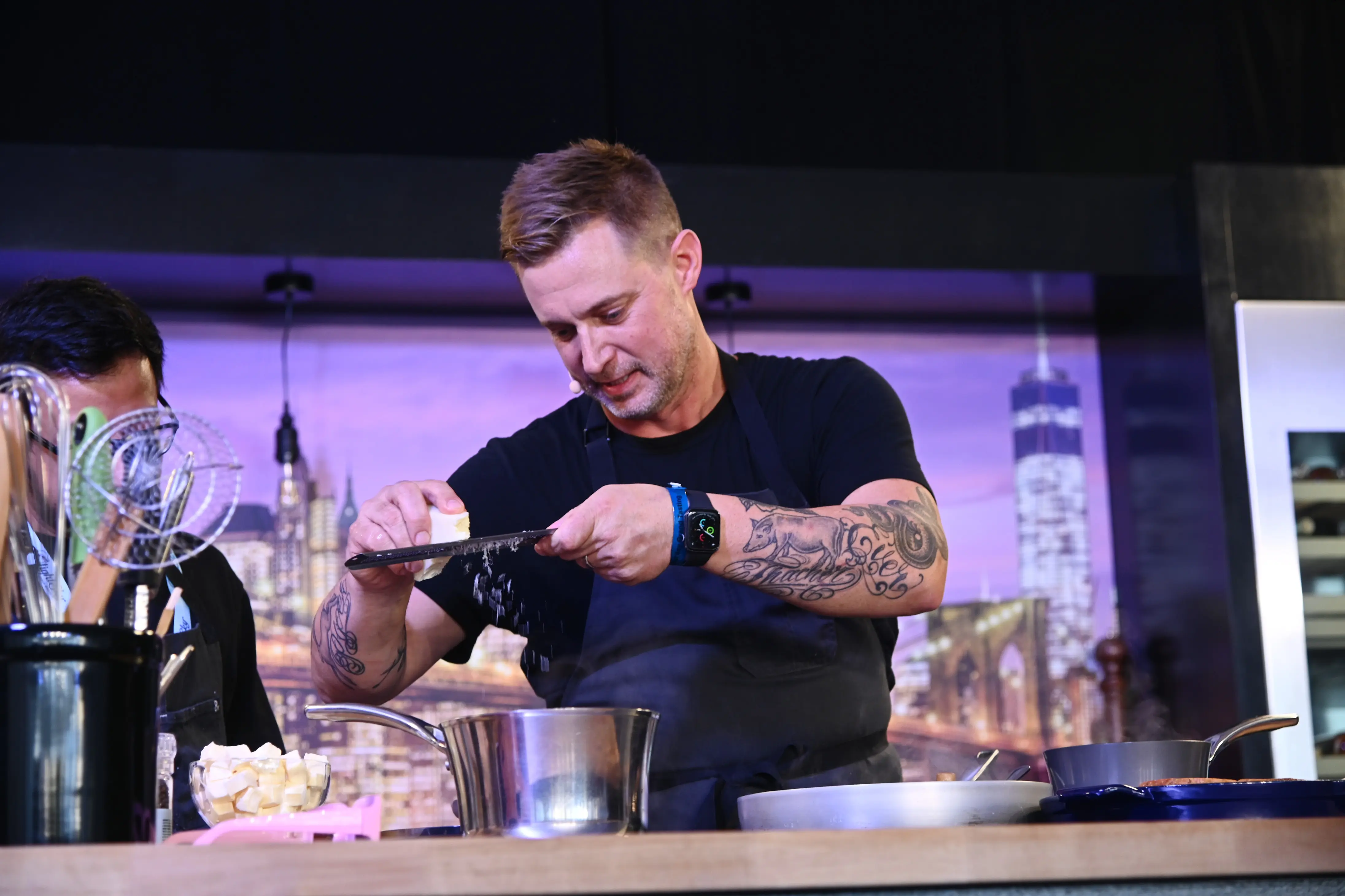
Yet what stood out most was not just the win, but Voltaggio’s mindset throughout the season. Unlike in previous competitions, where he sometimes questioned his decisions after a loss, this time he walked away from each round — including the finale — without regret. “I was proud of what I cooked,” he said. “I didn’t feel like I needed to change anything.”
That shift in mentality proved crucial. In past appearances, Voltaggio admitted he occasionally tried too hard to “sell” his dishes or cater to perceived expectations. But the blind judging format of Tournament of Champions forced a different approach — one rooted in authenticity and execution rather than persuasion. “You can’t cook for the judges,” he explained. “You have to cook your food, trust your instincts, and make sure you’re hitting every element.”
The turning point may have come early. His first-round battle, weighed down by the fear of another early exit, was the most nerve-wracking. “If I went home again, that would have defined my career on this show,” he admitted. But once he cleared that hurdle, his perspective shifted. The pressure eased, and he began to embrace the unpredictability of the competition — from the infamous Randomizer to the relentless clock.
By the time he reached the later rounds, including a standout semifinal performance, Voltaggio was no longer chasing validation. Instead, he was simply cooking at his best — confident, composed, and fully present. “I left everything out there,” he said. And this time, that was enough.
In the end, Bryan Voltaggio’s victory wasn’t just about finally winning. It was about rewriting a narrative that had followed him for over a decade — transforming years of “almost” into a defining moment of arrival.