The return of MasterChef for Season 16 is bringing a striking new dimension to the competition, turning the familiar cooking contest into a global battle shaped by heritage, culture, and regional identity. Titled MasterChef: Global Gauntlet, the season places 20 home cooks into four regional alliances: the Americas, Europe, Africa, and Asia-Pacific. Rather than competing only as individual chefs, the contestants enter the kitchen carrying the culinary traditions and cultural identities associated with the regions they represent, creating a format that promises intense rivalries and clashes of perspective at every stage of the competition.

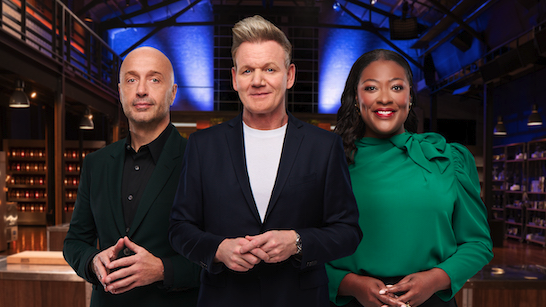
The World Cup-inspired concept gives the season a distinctly international character. Each contestant has been assigned to one of the four regional teams according to their heritage, creating a diverse field of home cooks with backgrounds spanning countries across the globe. Under the watchful eyes of judges Gordon Ramsay, Tiffany Derry, and Joe Bastianich, the 20 competitors will face high-pressure challenges designed to test not only their technical abilities but also their creativity, adaptability, and understanding of food. Ultimately, they will compete for the coveted MasterChef title, the iconic trophy, and a grand prize of $250,000.
Representing the Asia-Pacific alliance is Aishu Challa, who represents India and currently lives in Georgetown, Massachusetts. Her Indian heritage places her within one of the season’s most culturally diverse regional groups. She is joined on the Asia-Pacific team by Foo Nguyen, who represents Vietnam and resides in Irvine, California. Jaime Tan, representing Malaysia from Los Angeles, adds another Southeast Asian perspective to the group. Shompa Kabir-Furqan, representing Bangladesh and living in Brooklyn, New York, also competes for the region, while Daniel Meng represents China from Duluth, Georgia. Together, these contestants give Asia-Pacific a broad cultural footprint, bringing culinary traditions from South Asia, Southeast Asia, and East Asia into the Global Gauntlet.
Europe is represented by five contestants whose backgrounds span several different national traditions. Basia Newman represents Poland and currently lives in Asbury Park, New Jersey. Julia Cili, representing Italy, is based in Miami, Florida, while Aghata Sunsi represents Spain from Westminster, Colorado. Nico Cosereanu, another Italian representative, lives in Millburn, New Jersey, and Ted Pappas represents Greece from Chicago, Illinois. The European alliance therefore brings together distinct culinary identities from Poland, Italy, Spain, and Greece, setting the stage for competition between chefs whose food traditions may be vastly different despite sharing the same regional banner.
The African team also features a wide range of national backgrounds. Dave Patera represents Morocco and lives in Chicago, Illinois, while Heidi Muston represents South Africa from Plantation, Florida. Peter Egede represents Nigeria and is based in Dallas, Texas. Rita Igbinoba, also representing Nigeria, lives in Brooklyn, New York, giving the team two contestants connected to the same national heritage. Nora Chakri rounds out the African alliance, representing Morocco from Las Vegas, Nevada. With contestants connected to North, Southern, and West Africa, the team reflects the enormous diversity contained within the broader African region.

The Americas alliance brings together contestants with heritage from several countries throughout the Western Hemisphere. Jake Kelley represents Mexico and lives in Mount Pleasant, Michigan, while Tkaiya Dryden represents Jamaica from Jamaica Queens, New York. Maria Bourland, representing Brazil, is based in Miami Beach, Florida. Britny Underwood represents Barbados and lives in North Hollywood, California. Camilo Chavez III, another Mexican representative, lives in Bastrop, Texas. Their combined backgrounds give the Americas team a wide-ranging culinary identity that stretches from Mexico and the Caribbean to Brazil.
The makeup of the 20-person cast also provides an indication of how competitive the season could become. While some contestants enter the Global Gauntlet without a previous placement listed, several others are identified by their finishing positions in the competition. Maria Bourland is listed in 11th place, while Aghata Sunsi finished 12th. Rita Igbinoba and Shompa Kabir-Furqan share 13th-14th place. Britny Underwood and Daniel Meng are tied at 15th-16th place, followed by Nico Cosereanu in 17th, Ted Pappas in 18th, Camilo Chavez III in 19th, and Nora Chakri in 20th.
These placements add another layer to the season’s narrative, as the contestants are not simply introduced as cooks from different backgrounds. They are participants in a competition where national and cultural identity becomes part of the visual and emotional framework. The four-team structure creates natural lines of rivalry, but it also highlights the sheer variety of culinary traditions represented in the MasterChef kitchen.
The Global Gauntlet format therefore transforms Season 16 into something broader than a conventional individual cooking competition. Every challenge has the potential to become a meeting point between different culinary philosophies, techniques, ingredients, and traditions. Contestants may have to defend their individual cooking styles while simultaneously representing a much larger regional identity. That combination could make victories feel more significant and eliminations more dramatic, particularly when contestants from the same alliance are forced to compete against one another.
With 20 home cooks representing India, Poland, Morocco, Vietnam, South Africa, Malaysia, Mexico, Italy, Nigeria, Jamaica, Brazil, Spain, Bangladesh, Barbados, China, and Greece, MasterChef: Global Gauntlet is positioning food as a powerful expression of heritage. The competition brings together people from different parts of the world while placing them into four broad regional alliances, creating opportunities for both cultural celebration and fierce competition.
As Gordon Ramsay, Tiffany Derry, and Joe Bastianich oversee the season, the contestants will have to prove that their culinary skills can withstand the pressure of the Global Gauntlet. The ultimate challenge will not simply be about preparing an exceptional dish. It will be about adapting under pressure, standing out among talented competitors, and turning personal heritage into culinary strength. With a $250,000 grand prize, the MasterChef trophy, and the title at stake, all four regional alliances have plenty to fight for—and the cultural clashes created by the format could make Season 16 one of the most distinctive chapters in the franchise.