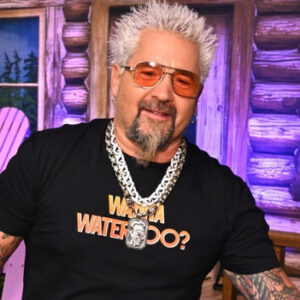
The competition on America’s Culinary Cup reached a boiling point this week as host Padma Lakshmi introduced one of the most demanding challenges yet: the “Culinary Science and Technology” commandment. With innovation at its core and precision as the deciding factor, the episode delivered both a masterclass in modern cooking and a shocking elimination.

At the center of this week’s challenge was Wylie Dufresne, widely regarded as a pioneer of molecular gastronomy. Under his guidance, contestants were tasked with utilizing advanced culinary techniques—ranging from spherification and foams to sous vide and flash freezing—while producing as many dishes as possible within an intense five-hour cookoff.
Unlike traditional cooking competitions, America’s Culinary Cup operates on a unique “Culinary Commandments” format. Each challenge is built around a central theme, pushing chefs to demonstrate not just skill, but mastery of a specific discipline. Dishes are scored based on the number of techniques used, with each technique multiplying the potential points awarded by judges. With no cap on creativity—or risk—the format encourages ambitious, high-stakes cooking where one bold move can make or break a chef’s standing.
This week, no one embraced that philosophy more successfully than Buddha Lo. The two-time Top Chef champion delivered a near-flawless performance, amassing an astonishing 710 points—far ahead of his competitors. His ability to seamlessly integrate multiple molecular techniques into cohesive, high-quality dishes solidified his position as the frontrunner of the season.
:max_bytes(150000):strip_icc():focal(600x287:602x289)/buddha-lo-pregnancy-announcement-062823-tout-48abb15ef9bf4dec9b8f464d2fdcd075.jpg)
Trailing behind him were Cara Stadler with 659 points and Chris Morgan with 595, both delivering strong performances but unable to match Buddha’s technical dominance. Meanwhile, chefs like Katie Button and Matt Peters struggled to keep pace in a challenge that demanded both speed and precision.
But the biggest shock of the night came at the bottom of the leaderboard. —a Michelin-starred chef and widely considered one of the strongest contenders—finished with just 362 points, resulting in her elimination. The outcome was particularly surprising given that she had been voted by her fellow contestants just a week earlier as the most likely to win the entire competition.
Following her departure, Kim delivered an emotional reflection on her journey. “This commandment was crazy, I guess it got the best of me,” she said through tears. “I was kind of in the zone and I got lost in it.” Despite the disappointment, her perspective remained forward-looking. “I feel this last seven weeks, I’ve grown as a chef and I’ve also grown as a person. I’m less afraid to be myself. Just because the chapter is ending here doesn’t mean my book won’t continue to go forward.”

Her words captured the essence of what sets America’s Culinary Cup apart—not just as a competition, but as a platform for transformation. The show’s format, with its emphasis on technical mastery and conceptual creativity, leaves little room for error. Even the most accomplished chefs can falter when pushed beyond their comfort zones.
As the competition progresses, Buddha Lo’s commanding victory positions him as the clear chef to beat. However, in a format this unpredictable, dominance can quickly turn into vulnerability. If this week proved anything, it’s that in America’s Culinary Cup, no lead is safe—and no favorite is guaranteed a path to the $1 million prize.