The finale of Tournament of Champions Season 7 delivered a historic result, with Bryan Voltaggio claiming his first major solo television title. But while his 84–83 win over Kevin Lee was officially decided by a single point on taste, a growing number of fans believe the real story lies deeper—in how the dishes were judged.
Specifically, the judging panel—featuring Brooke Williamson, Mei Lin, and others—has come under scrutiny for what some viewers interpret as a subtle but consistent preference for “clean,” technically precise cooking over bold creativity.

The Case for Bryan: Precision at Its Peak
There is no denying that Voltaggio delivered one of the most refined performances of the night. Across both the semifinal and final rounds, his dishes were repeatedly described as “thoughtful,” “finessed,” and “perfectly executed.”
In the semifinal against Kenny Gilbert, Voltaggio’s dish earned near-unanimous praise, even scoring a rare perfect 10 in presentation. Judges highlighted not just the flavor, but the precision—every element cooked correctly, every component balanced.
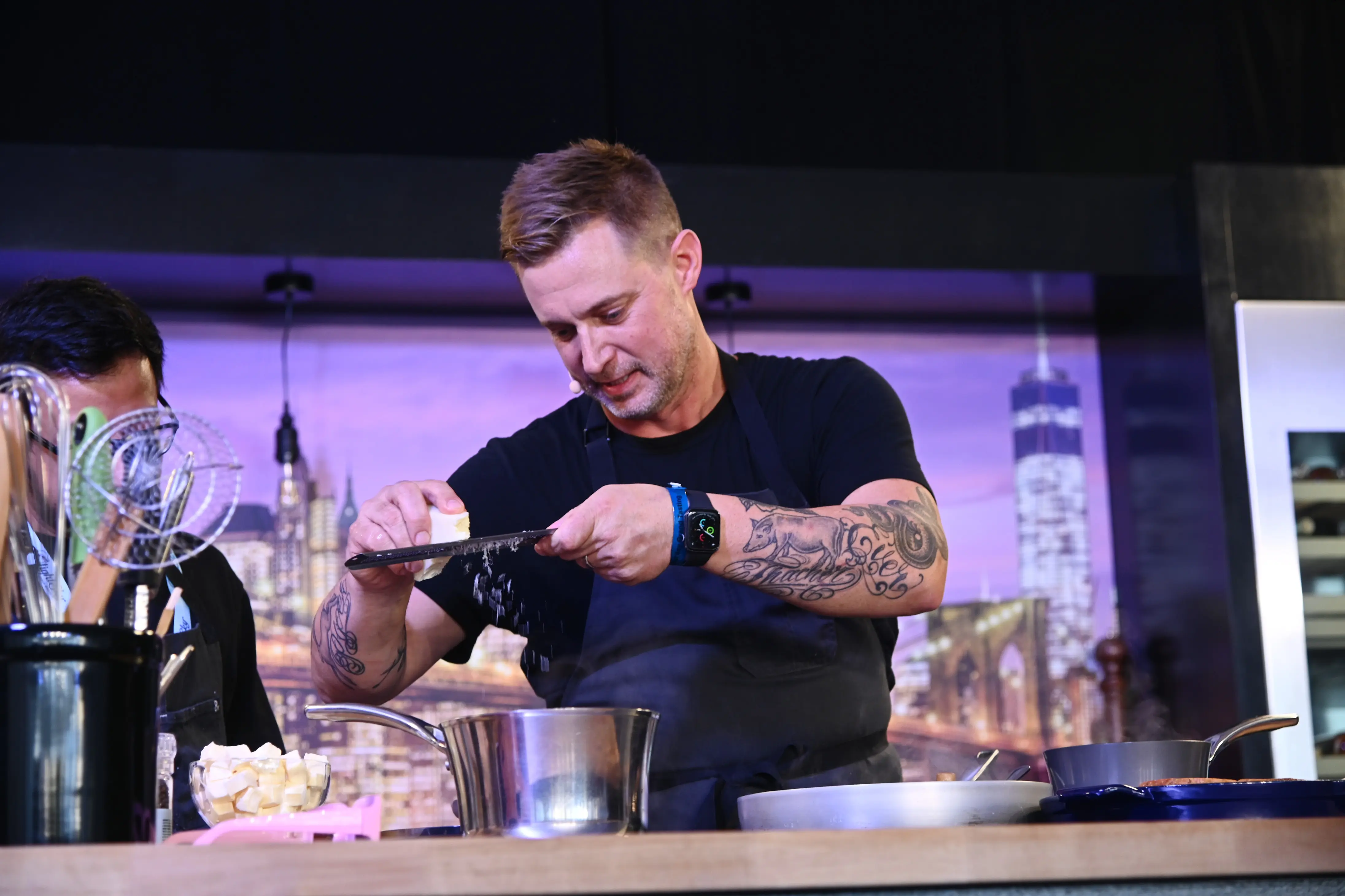
That same pattern carried into the finale. His king crab grits and tempura-fried crab legs were described as technically flawless, with perfectly cooked seafood and strong overall structure. Even when minor critiques appeared—such as a slightly thick crust—they were framed within an otherwise highly controlled execution.
In a competition where scores are split across taste, Randomizer use, and presentation, that level of consistency matters.
The Case for Kevin (and Kenny): Creativity with Risk
On the other side, chefs like Kevin Lee—and earlier, Kenny Gilbert—leaned more into creativity and bold flavor combinations.
Kevin’s final dishes, including a king crab juk (porridge) and Korean-style fried crab, were widely praised for their flavor and ambition. Judges described elements as “sticky icky” in a positive sense, emphasizing richness and depth. However, critiques focused on composition choices—like how certain ingredients were separated or how effectively the crab was highlighted.

Similarly, Kenny Gilbert’s semifinal dish was labeled an “umami bomb” and “expertly put together,” but small imperfections—slightly overcooked liver, less refined knife work—ultimately cost him points against Voltaggio’s cleaner execution.
This pattern has fueled debate among fans: were these chefs penalized not for lack of skill, but for prioritizing creativity over precision?
“Clean Cooking” as an Unspoken Standard?
Some viewers now argue that the judges’ language consistently reinforced a preference for polish. Words like “refined,” “balanced,” and “perfectly cooked” appeared frequently in praise of Voltaggio’s dishes, while critiques of others often centered on minor technical flaws—even when their creativity stood out.
The implication, according to critics, is that “clean cooking” has become an unspoken benchmark—one that may carry more weight than innovation in close matchups.
That theory gains traction when looking at the final score. Voltaggio and Kevin tied in both presentation and use of the Randomizer. The entire competition came down to a single point in taste—a category that, in theory, should reward boldness as much as precision.
Instead, it appears that flawless execution may have tipped the scale.
A Fair Outcome—or a Narrow Lens?
To be clear, there is no suggestion of bias in the traditional sense. Tournament of Champions is built on blind judging, a format designed—according to past champions like Tiffani Faison—to eliminate personal bias and focus entirely on the food.

But even within that system, judging preferences still exist.
And in a finale this close, those preferences may have made all the difference.
Voltaggio’s victory is unquestionably earned—his dishes were among the most technically impressive of the season. Yet the reaction from fans suggests a broader conversation about what should define a champion: flawless execution, or fearless creativity?
In TOC VII, at least, precision won by a single point.