As Next Level Chef Season 5 heats up on paper, a different kind of tension is building off-screen — and it’s coming from the audience.

In recent episodes, particularly the high-stakes “Use Your Noodle” challenge, fans have begun voicing frustration over what they see as an increasingly predictable editing style. What should be suspenseful, edge-of-your-seat television is, for many viewers, becoming something else entirely: a puzzle that’s far too easy to solve.
At the center of the criticism is a familiar reality TV trope — what fans call the “confidence edit.”
The formula is simple and, according to viewers, overused. A contestant is shown expressing strong confidence, sometimes bordering on cockiness. The edit lingers. Music cues subtly shift. And almost inevitably, that same contestant ends up struggling or landing in the bottom.
For longtime viewers, this pattern has become so recognizable that it’s no longer dramatic — it’s predictive.
Christian’s storyline in the latest episode is a prime example. Early in the challenge, he was portrayed as highly confident, even aggressive during the ingredient grab. The narrative framed him as someone in control, willing to do whatever it takes to win. But instead of building tension, many fans say the edit practically signaled

By the time judging came around, a portion of the audience already expected him to falter.
That’s the core issue: when storytelling becomes too transparent, it stops being storytelling and starts feeling like a spoiler.
Reality competition shows thrive on uncertainty. The magic lies in not knowing who will rise, who will fall, and how close the margins truly are. But when editing patterns repeatedly telegraph outcomes, that uncertainty disappears — and with it, much of the excitement.
Fans have pointed out other recurring cues as well. Emotional backstories often precede either a breakthrough or an elimination. Understated contestants who receive little screen time suddenly become “invisible edits,” signaling they’re either safe or irrelevant to the episode’s main drama. Meanwhile, dramatic music and reaction shots sometimes exaggerate tension in ways that feel manufactured rather than earned.
Individually, these techniques aren’t new — they’re staples of reality TV. But the criticism suggests that Next Level Chef is leaning on them too heavily, to the point where viewers can anticipate outcomes before they happen.
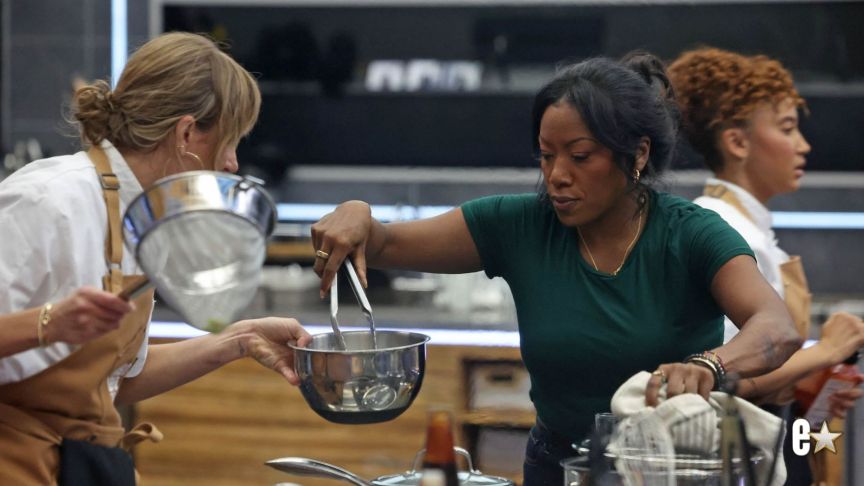
And that anticipation isn’t satisfying — it’s deflating.
What makes this backlash particularly notable is that it comes at a time when the culinary competition itself is arguably stronger than ever. With only a handful of chefs remaining, the skill level is high, the dishes are refined, and the stakes are real. Yet instead of enhancing those elements, the editing risks undermining them.
Take the elimination of Danielle, for example. While the judges’ decision came down to technical details on the plate, many viewers felt the episode had already framed her as vulnerable long before the final tasting. Whether intentional or not, the narrative arc seemed to guide the audience toward that outcome, reducing the emotional impact of the moment.
The result is a paradox: a show built on high-pressure unpredictability is starting to feel predictable.
That doesn’t mean the solution is simple. Editing a competition series involves balancing clarity, storytelling, and pacing — all while condensing hours of footage into a single episode. Some level of narrative shaping is inevitable.
But fans are clearly asking for something different: less obvious foreshadowing, more ambiguity, and a return to genuine suspense.
They want to be surprised again.
Because at its best, Next Level Chef isn’t just about who cooks the best dish — it’s about the journey, the tension, and the moments that no one sees coming. If the outcome feels pre-written by the edit, those moments lose their power.
And if that pattern continues, the risk isn’t just criticism — it’s disengagement.
For now, the competition remains fierce, and the talent undeniable. But whether the show can adjust its storytelling approach may determine if viewers stay invested through the final episodes — or start tuning out before the next “predictable” twist arrives.