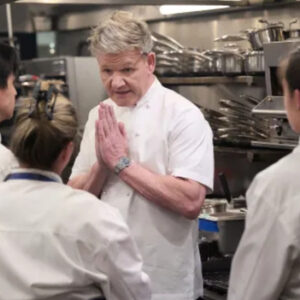
In the world of culinary reality television, audiences have become familiar with Gordon Ramsay’s explosive temper, powerful voice, and intimidating stares. His sharp criticism and intense kitchen presence have become part of the MasterChef experience. However, for contestants standing under the pressure of the competition, the most frightening moment is not when Ramsay starts shouting. The true warning sign comes when he suddenly stops yelling, walks into the kitchen, rolls up his sleeves, and decides to take control himself.

That terrifying moment unfolded during the latest episode of MasterChef: Global Gauntlet in the brutal “Restaurant Takeover” challenge. With only the Top 6 contestants remaining, the competitors were pushed into a real restaurant service environment where every mistake could have serious consequences. At Cluny Bistro, the Red Team — led by captain Basia Newman alongside Peter Egede and Dave Patera — entered the evening service hoping their preparation would help them succeed. But their confidence quickly collapsed as the pressure of a professional kitchen exposed their weaknesses.
The disaster began almost immediately during the appetizer course. Plates of seafood repeatedly came back from customers because the dishes were not cooked properly. Problems with seasoning, poor communication, and confusion over orders caused the team to lose control of the entire service. Instead of recovering, the situation continued to worsen. Every attempt to fix their mistakes created even more chaos, especially when the main courses arrived and their struggles with the salmon dish pushed the kitchen closer to complete failure.
For most MasterChef contestants, Gordon Ramsay’s anger is something they expect and prepare for. His shouting is often meant to force chefs to focus, move faster, and correct their mistakes before it is too late. But at Cluny Bistro, even his constant warnings and pressure could not bring the Red Team back on track. The team had fallen too far behind, and their lack of coordination made it clear that they were no longer capable of managing the service on their own.

Then came the moment every contestant fears: Gordon Ramsay stopped shouting. Instead of continuing to criticize from the sidelines, he walked directly into the Red Team’s cooking area and began helping prepare the dishes himself. In a professional restaurant, a chef stepping in during a crisis can be necessary to protect the quality of the food and the reputation of the establishment. But in MasterChef, where contestants are being judged on their ability to handle pressure, Ramsay taking over the kitchen represents something much more serious. It is not a rescue; it is proof that the contestants have lost control.
Ramsay’s intervention became the ultimate red flag for the Red Team. His decision to physically step in showed that their performance had reached a breaking point. They were no longer simply making small mistakes that could be corrected with guidance. They had reached the stage where the survival of the service depended on someone else taking charge. In the world of competitive cooking, that moment often signals the end because contestants are expected to prove they can lead, adapt, and perform without relying on the judges to save them.
By the end of the challenge, the outcome was almost inevitable. The Red Team suffered a clear defeat against the Blue Team, and the consequences of their failed service were severe. Although all three members struggled throughout the night, Dave Patera faced the harshest judgment. His repeated problems with the salmon dish, combined with his difficulty maintaining control during the service, made him the contestant who paid the biggest price. The judges ultimately decided that his journey in MasterChef had come to an end just before reaching the Top 5.

The “Restaurant Takeover” challenge delivered a powerful reminder that surviving in a high-level MasterChef competition requires more than individual cooking talent. Under real pressure, with limited time and demanding customers, teamwork, communication, and mental strength become just as important as technical ability. Gordon Ramsay’s silence may be more frightening than his anger because it means the situation has gone beyond criticism. When the toughest judge in the kitchen has to put down his microphone and pick up a pan, the message is clear: the battle may already be lost.