EXCLUSIVE: Cereal in Tupperware and ‘Caravan’ Casseroles! The Shocking Truth Behind the Queen’s Grueling Royal Tour Diet Revealed

From the outside, it was a life of shimmering tiaras, gold-plated service, and the finest Michelin-style cuisine the world had to offer. But behind the velvet curtains of the late Queen Elizabeth II’s most grueling royal tours lay a startling culinary reality that was far more “camping trip” than “Buckingham Palace banquet.”
While the world imagined the monarch dining on lobster thermidor and venison as she traversed the globe, a former royal insider has pulled back the curtain on the “modest” and often “primitive” conditions the Queen was forced to endure. It turns out that for decades, the most powerful woman on the planet was fueled by what can only be described as “caravan-style” cooking.
‘Cooking in a Caravan’
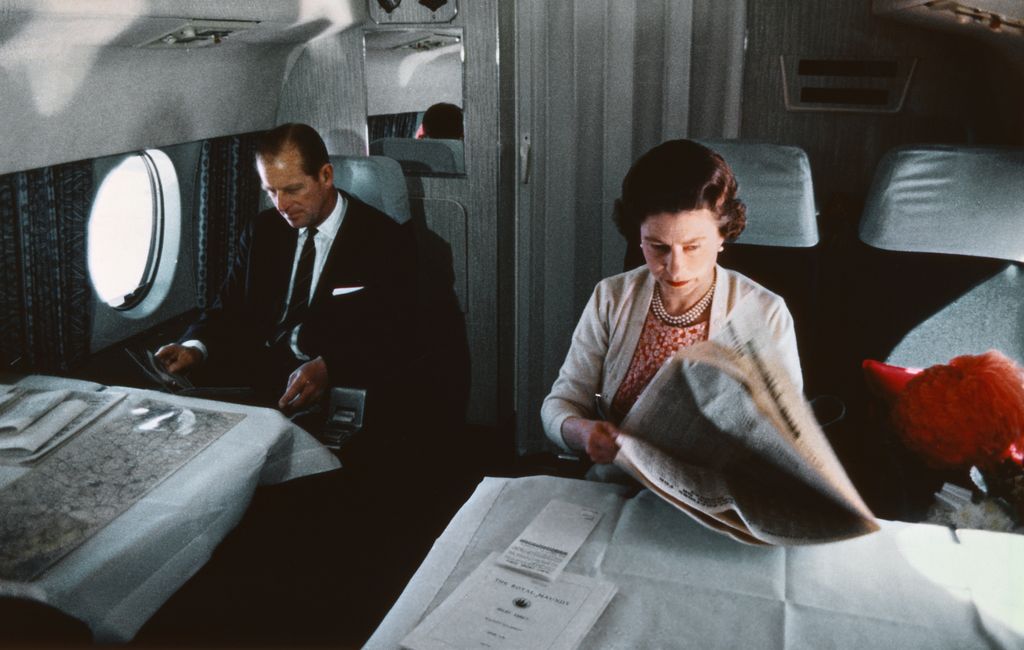
Speaking on HELLO!’s A Right Royal Podcast, Graham Laurie—King Charles’s former pilot—revealed the unglamorous secrets of royal travel. Before the upgrade to modern jets, the Queen and Prince Philip often traveled in the Andover, an aircraft that lacked even a basic kitchen.
“The lovely thing was that we got all our food from British Airways at Heathrow,” Laurie explained. “But in the Andover, the best description was like cooking in a caravan.”
 © Bettmann
Queen Elizabeth II had limited options for food and drink when she travelled in an Andover
Forget a brigade of chefs; the royal “galley” consisted of a single small hot plate and a “hot jug” that resembled a kettle. This solitary jug was the multitasker of the century—used to heat water, brew coffee, and warm up pre-prepared meals. For a woman who spent her evenings at State Banquets hosted by world leaders, her daytime reality was a cramped cabin and a lukewarm “hot pot” heated over a glorified camping stove.
Princess Anne’s Love for ‘Frozen Pies’
The transition in December 1990 to the BAe 146 four-engine jets brought a slight upgrade in luxury—but not in the way one might expect. The new aircraft allowed for a slightly more sophisticated cooking method: the frozen pie.
According to Laurie, Princess Anne was a particular fan of these humble, pastry-clad meals. He described the shift to frozen comfort food as a “pleasant change from all the poncey first-class food” usually associated with high-altitude travel.
It paints a remarkably humanizing picture of the House of Windsor. While the public saw a family of untouchable icons, the reality was a Princess tucking into a steak and kidney pie in a pressurized cabin, relishing the simplicity of a meal that wouldn’t look out of place in a suburban supermarket freezer.
 © Getty Images
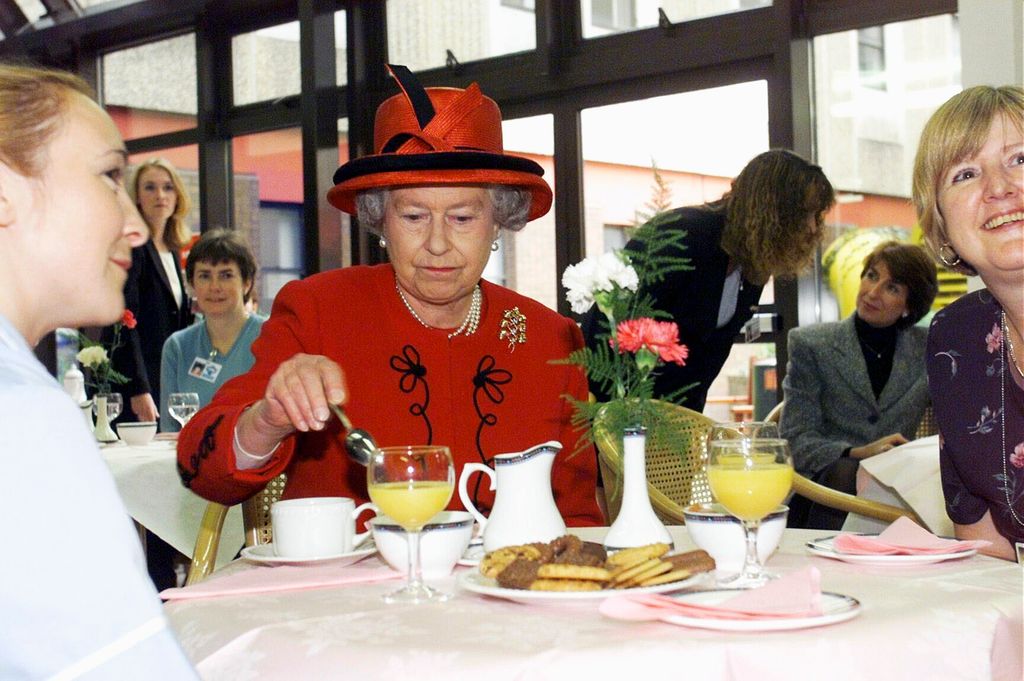
The late monarch liked Earl Grey tea and porridge
Porridge and Tupperware: The Queen’s Simple Pleasures
The Queen’s “no-nonsense” approach to food wasn’t just a necessity of travel; it was a personal preference. It is well-documented that Her Majesty had a penchant for the simple things—often to the bewilderment of her husband, the late Prince Philip.
“If it was customary to have porridge at every meal, Lilibet would have it,” Prince Philip once quipped, as recorded by Thomas Blaikie in his book, What a Thing to Say to the Queen.
Her breakfast routine remained fiercely consistent, whether she was at Balmoral or flying over the Atlantic. She was famously fond of Earl Grey tea—taken without sugar—and opted for classic cereals, which she was rumored to keep in Tupperware containers to maintain their “snap, crackle, and pop” freshness.

The Secret Tin on the Train
Perhaps the most charming revelation comes from former royal chef Darren McGrady. He recalled the lengths to which the Queen would go to ensure her favorite treats weren’t wasted during her travels.
One of her absolute weaknesses was the chocolate biscuit cake—the very same recipe requested by Prince William for his wedding groom’s cake. The Queen loved it so much that she refused to leave a single crumb behind.
“I used to travel on the train from London to Windsor Castle with the biscuit cake in a tin on my knee,” McGrady told The Huffington Post. “It was half-eaten.”
The image of a royal chef cradling a Tupperware tin of leftover cake on a public train journey perfectly encapsulates the “waste not, want not” attitude the Queen maintained throughout her 70-year reign.

A Legacy of Resilience
The contrast between the “regal glamour” seen by the cameras and the “caravan-style” reality of the Queen’s tours serves as a testament to her dedication. To keep up with a schedule that would exhaust someone half her age, Queen Elizabeth II accepted modest meals and cramped conditions without complaint.
In an era of private jets and “diva” demands, the late Monarch’s willingness to swap caviar for a hot-jug coffee and a bowl of porridge proves that while she wore the Crown, her heart—and her stomach—remained remarkably grounded.