Gary Dobson, one of the men convicted in the racist murder of Black teenager Stephen Lawrence in 1993, has officially begun the process of seeking early release from his life sentence. After years behind bars, Dobson’s parole application will now be examined by the Parole Board, which will decide whether he can safely be released into the community. However, in order to improve his chances of gaining freedom, Dobson may face one of the most difficult decisions of his life: confronting the circumstances surrounding the crime and addressing questions about his involvement in Stephen Lawrence’s death.
Gary Dobson, now 51, has made his first formal attempt to secure parole after being sentenced to life imprisonment in 2012 for the murder of 18-year-old Stephen Lawrence, alongside co-defendant David Norris. Their convictions came nearly two decades after the horrific attack that shocked the United Kingdom and became one of the most significant cases involving racism, policing, and justice in modern British history.
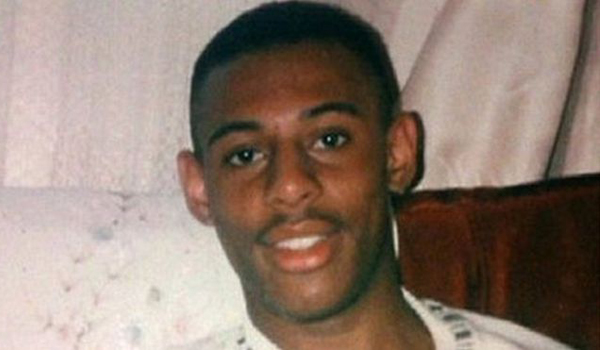
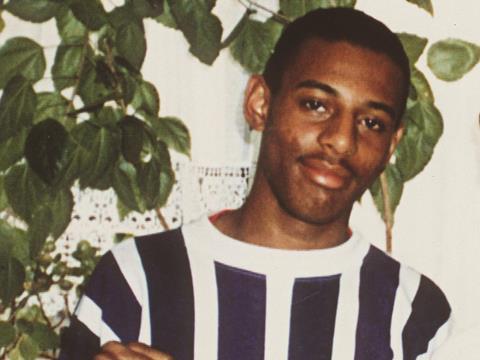
Stephen Lawrence was murdered on the evening of April 22, 1993, while waiting for a bus with a friend near a bus stop in Eltham, south-east London. Prosecutors said he was attacked by a group of white youths, stabbed repeatedly, and left dying on the pavement. The killing was described in court as a racist attack carried out by a violent gang against a completely innocent young man whose life had been filled with promise.
The case remained unresolved for many years until new scientific evidence helped bring Dobson and Norris to justice. At the Old Bailey, prosecutors presented forensic evidence, including a stain found on Dobson’s jacket that matched Stephen Lawrence’s blood. This evidence played a crucial role in securing their convictions.
When sentencing Dobson and Norris, Mr Justice Treacy described Stephen Lawrence as a “totally innocent 18-year-old youth on the threshold of a promising life” who was “brutally cut down in the street” in front of witnesses by a racist and thuggish gang.
The Parole Board has confirmed that Dobson’s case has now been referred by the Secretary of State for Justice as part of the normal parole process. The upcoming review will focus on whether Dobson still presents a risk to the public and whether any potential risk could be managed if he were released.
A spokesperson for the Parole Board explained that decisions are based entirely on public safety. Officials will examine a wide range of evidence, including details of the original crime, Dobson’s behaviour while in prison, any evidence of personal change, and the impact that the murder has had on Stephen Lawrence’s family.
The parole hearing will also consider evidence from professionals such as probation officers, psychologists, psychiatrists, prison officials, and others who have been involved in supervising Dobson. Victim personal statements may also be presented, allowing those affected by the crime to explain the lasting harm caused by Stephen’s murder.
Although prisoners do not always have to admit their crimes in order to be granted parole, continued denial of responsibility can make release less likely. The Parole Board has stated that it cannot comment on the extent to which individual prisoners have accepted guilt, but the issue of accountability is expected to be a significant factor in Dobson’s case.
Stephen Lawrence’s parents, Baroness Doreen Lawrence and Dr Neville Lawrence, are expected to oppose Dobson’s attempt to be released. Dr Neville Lawrence has previously made clear that he intends to challenge any effort to grant parole.
The case follows the earlier parole decision involving David Norris, Dobson’s convicted co-defendant. Norris, who was sentenced to life imprisonment with a minimum term of 14 years and three months, was denied parole after a public hearing. During that hearing, Norris appeared by video link and refused to show his face.
Although Norris eventually admitted some involvement after years of denying responsibility, he claimed he only punched Stephen Lawrence as the teenager attempted to escape. He also refused to identify other people involved in the attack, saying he wanted to protect his family.
Dobson and Norris remain the only two people ever convicted of Stephen Lawrence’s murder. However, they were among five young men whose names and photographs were famously published on the front page of the Daily Mail in 1997 under the headline accusing them of being responsible for the killing. The newspaper’s campaign played a major role in keeping public attention on the case and demanding justice for Stephen’s family.
Parole experts will now closely examine Dobson’s current attitude, his behaviour in prison, and any evidence of rehabilitation before reaching a decision. The process comes at a time of continued public concern over the release of serious offenders, although Dobson is not part of any general early release scheme.
The decision surrounding his parole will not only focus on the years he has spent in prison but also on whether he has demonstrated genuine change and whether he can be trusted to live safely in society. For Stephen Lawrence’s family, the possibility of Dobson’s release represents another painful chapter in a case that has remained a symbol of the fight against racist violence and the pursuit of justice.