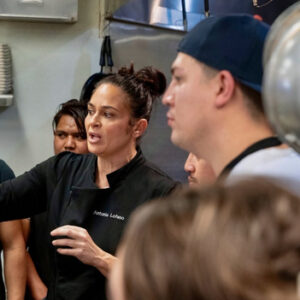
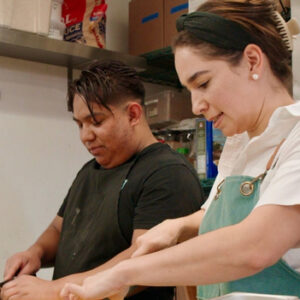
In the recently aired sixth episode of the reality series Kitchen Undercover, viewers were taken on an emotional rollercoaster that quickly shifted from concern to frustration and, eventually, outright outrage. While serious food-safety and hygiene problems immediately raised red flags, the controversy that truly set social media ablaze came from the striking contrast between the restaurant’s kitchen staff and its owners. What initially appeared to be a story about an overwhelmed restaurant team gradually became a much deeper examination of poor leadership, inadequate training, and the consequences employees are forced to bear when those in charge fail to take responsibility.

From the opening moments of Chef Antonia Lofaso and sous-chef Nestor Milian’s undercover observation at Mami Mosas, a brunch restaurant in West Covina, California, viewers could see an unusual divide between the front and back of the house. The Front of House team appeared remarkably professional despite working under severe pressure, staff shortages, and chaotic operating procedures. Servers continued greeting customers warmly, responding quickly to complaints, and doing everything possible to calm increasingly impatient diners. Their ability to remain composed while dealing with problems beyond their control earned considerable praise from viewers, with many describing the FOH employees as one of the few things keeping the restaurant from completely falling apart.
The situation looked dramatically different once the undercover chefs entered the Back of House. Inside the kitchen, delays, confusion, poor coordination, and a lack of basic control appeared to be constant problems. Orders struggled to move efficiently, procedures seemed unclear, and the overall environment reflected a workplace without a reliable operational system. Yet rather than simply blaming the kitchen employees, many viewers found themselves sympathizing with them. The staff appeared to be working within a system that had failed them long before the cameras arrived. They lacked adequate training, clear standards, and consistent guidance, leaving them to cope with demanding responsibilities in an environment that offered little support.
That distinction became especially important as viewers began questioning who was truly responsible for the restaurant’s problems. The kitchen employees were visibly struggling, but their struggles seemed less like deliberate incompetence and more like the result of being placed in positions for which they had not been properly prepared. Social media discussions repeatedly emphasized that employees cannot be expected to perform at a high level when management provides neither sufficient instruction nor effective procedures. One Reddit commenter summarized the sentiment by arguing that the kitchen team was not intentionally doing a poor job; instead, they had received inadequate training and were attempting to survive in an extremely dysfunctional workplace. The sympathy directed toward the employees highlighted how quickly public opinion shifted away from blaming workers and toward examining the owners’ responsibilities.

Much of the frustration ultimately centered on Abby and Jorge, the owners of Mami Mosas. As the episode revealed more about the restaurant’s management, viewers increasingly saw the couple as the weakest link in the entire operation. Instead of building a structured system, investing in employee training, or actively addressing operational weaknesses, they appeared to remain largely detached from the daily problems confronting their staff. The impression created was that too much responsibility had been placed on relatively inexpensive workers without giving them the resources, supervision, or knowledge necessary to succeed. For viewers, this was more than a business mistake; it was a management failure that directly affected the people working hardest to keep the restaurant functioning.
The consequences were particularly unfair for the employees on both sides of the restaurant. In the kitchen, workers were expected to prepare food without mastering essential cooking procedures or even consistently following fundamental food-safety standards. Meanwhile, FOH employees were left to absorb customers’ anger whenever orders were delayed, incorrect, or poorly handled. They had to face the public and apologize for problems they did not create. At the same time, employees were carrying the workload and emotional pressure created by decisions made above them, creating a situation in which staff members effectively paid the price for management’s lack of preparation and accountability.
Across social media, viewers therefore began defending the Mami Mosas employees rather than attacking them. Many pointed to the restaurant’s lack of meaningful training as one of its most serious weaknesses, particularly because kitchen workers were being asked to perform critical tasks without sufficient knowledge of food safety or proper culinary techniques. Others focused on the psychological pressure placed on the FOH team, who had to deal directly with dissatisfied customers while having little control over the underlying causes. The episode also sparked criticism over the apparent imbalance in responsibility: employees were expected to work harder and absorb more pressure while the owners failed to provide the leadership needed to make their efforts effective.

Ultimately, Episode 6 of Kitchen Undercover became more than a dramatic restaurant rescue story. It offered a clear warning about what happens when a food-and-beverage business relies almost entirely on employee effort while its management structure remains ineffective. A restaurant cannot operate successfully simply because frontline workers continue pushing themselves through chaos. Without proper training, clear procedures, active leadership, and responsible ownership, even hardworking employees will eventually reach their limits. Antonia Lofaso’s decisive intervention near the end of the episode offered Mami Mosas a potential path toward rebuilding its operations, but viewers were left with a more important question than whether the restaurant would receive a new menu or refreshed appearance: whether Abby and Jorge would genuinely change their approach and become more responsible owners who support, train, and protect the employees whose efforts have been keeping their business alive.