For 15 years, Bobby Flay Steak was exactly the kind of restaurant people expected to find inside an Atlantic City casino.
It had a wood-paneled dining room, dim lighting, an expensive steakhouse menu and the name of one of America’s most recognizable celebrity chefs attached to the door.
Then, in 2021, it closed.
For many diners, that looked like the end of the story.
It was not.
According to Chowhound, Bobby Flay Steak eventually returned two years later, but not as another traditional steakhouse. Instead, the brand was revived through Wonder, a premium delivery company operating a ghost-kitchen model.
That shift may be more interesting than the closure itself.
Bobby Flay Steak originally opened in 2006 inside the Borgata Hotel Casino & Spa in Atlantic City, where it shared the broader casino dining scene with other celebrity-chef restaurants, including those associated with Wolfgang Puck.
The concept mixed traditional steakhouse expectations with Flay’s own flavor profile.
His food has long been associated with smoke, bold seasoning, Southwestern influences and chiles, and the restaurant reflected that.
One of its signature dishes was Filet Mignon Louisiana, served with Cajun-style crawfish and béarnaise sauce.
Another took inspiration from the cheesesteak, pairing strip steak with provolone sauce and caramelized onions.
The menu also extended beyond beef, with dishes such as lamb chops with mint pesto and a bourbon toffee profiterole for dessert.
A 15-year run matters.
The restaurant therefore cannot reasonably be described simply as a failed experiment that disappeared after a short period.
In April 2021, Flay’s hospitality group Bold Food and Borgata announced that they had mutually agreed to close Bobby Flay Steak.
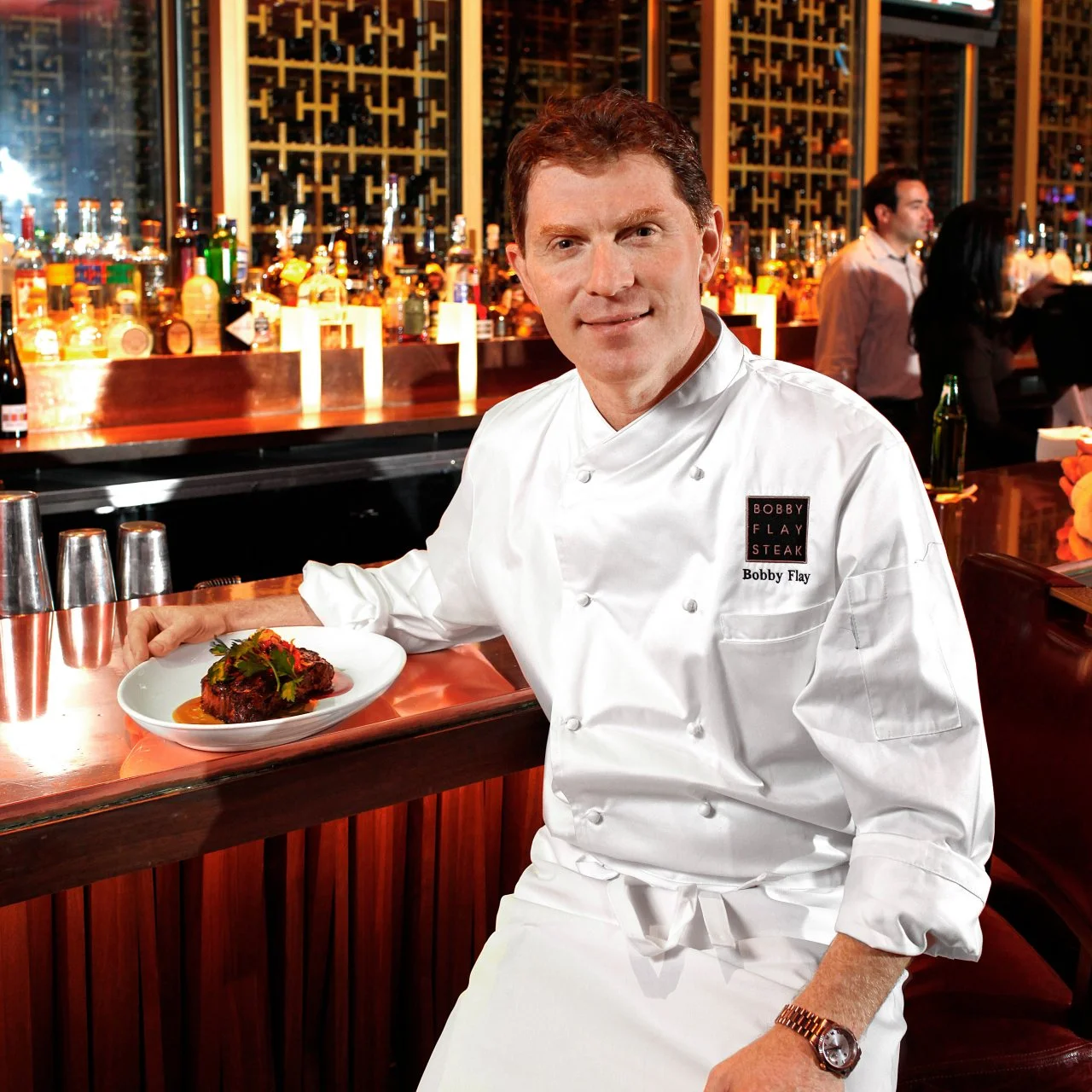
The official explanation was “evolving business strategies.”
Borgata denied that COVID-19 was the reason for the closure, although the casino had been losing money during the pandemic.
That ambiguity is important.
The restaurant closed during a period in which the hospitality industry was under extraordinary pressure, but the public explanation did not frame the decision as a pandemic shutdown.
Instead, it was presented as a strategic change.
For two years, the brand appeared to be gone.
Then Wonder gave it a second life.
Wonder licenses the names of prominent chefs and sells dishes associated with them through its own delivery operation.
Its roster includes figures such as José Andrés and Marcus Samuelsson, alongside Bobby Flay.
But the model is fundamentally different from a celebrity chef opening and operating a restaurant in the traditional sense.
There is no dining room.
Customers do not sit down inside a Bobby Flay Steak location.
The food is prepared through a ghost-kitchen system designed specifically for delivery.
One of Wonder’s main selling points is that diners can order food tied to several different chefs or concepts at once.
Someone could, for example, order steak associated with Flay and garlic shrimp associated with Andrés in the same transaction.
The company later acquired Grubhub, giving it access to an already established delivery audience, and its kitchens operate in several northeastern cities from Boston to Washington.
The exact level of day-to-day involvement from the celebrity chefs is less clear.
At the operational level, the restaurants appear to be run by Wonder rather than by Flay, Andrés or the other chefs whose names appear on the concepts.
Still, Flay was reportedly not a passive participant from the beginning.
Before joining Wonder, he was given a taste-test.
He was impressed enough not only to license his name and dishes but also to become an investor in the company.
That detail helps explain why the delivery version of Bobby Flay Steak should not be viewed purely as a copy of the original restaurant.
It is a different product.
The Wonder menu is simpler than the old Borgata menu.
The focus is on saucy steaks, while more elaborate items such as Filet Mignon Louisiana and the cheesesteak-inspired steak are absent.
In other words, the new version keeps the core idea — Bobby Flay and steak — while stripping away much of what made the original restaurant a full dining experience.
That is the real transformation.
The old Bobby Flay Steak sold more than food.
It sold atmosphere, location and occasion.
You entered a casino steakhouse, sat under dim lighting and ordered a menu built around the personality of a celebrity chef.
The new Bobby Flay Steak is closer to a portable brand.
It arrives at your door.
That does not mean Flay has abandoned the dine-in steakhouse world entirely.
For customers who still want a traditional sit-down steak experience associated with him, Chowhound points to Brasserie B in Las Vegas.
That restaurant takes a French-style approach, serving steak-frites and rich sauces built around ingredients such as cognac and truffles.
So Bobby Flay’s steakhouse presence did not vanish.
It split into two forms.
One is a physical restaurant experience under a different name.
The other is Bobby Flay Steak itself, preserved through delivery.
That may be the most revealing part of the story.
The restaurant people remember from Borgata is gone.
The brand is not.
And in today’s restaurant business, that distinction may matter more than ever.