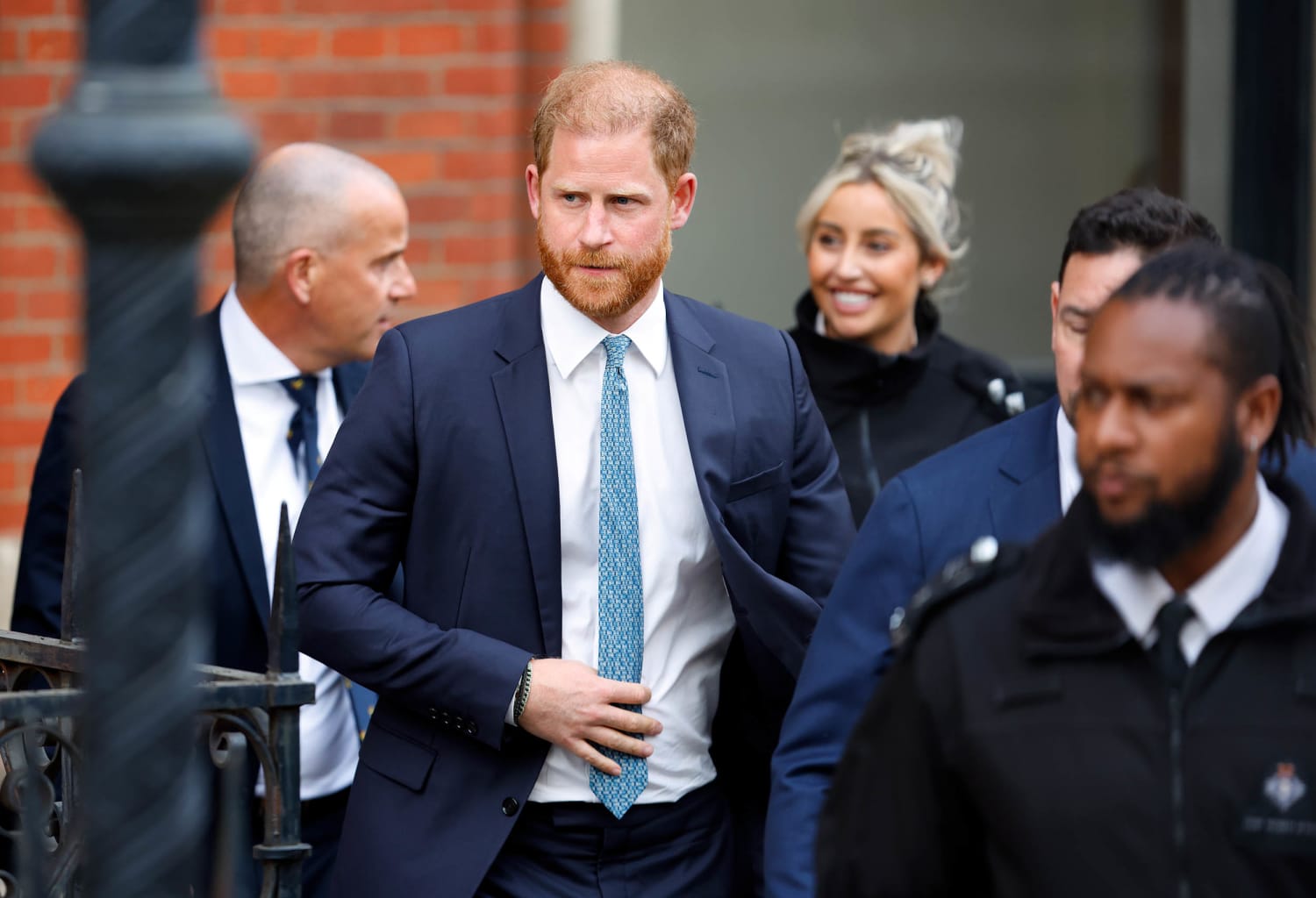
Only weeks after suffering a major legal defeat, Prince Harry is once again heading back to London’s High Court.
The Duke of Sussex, together with several other high-profile claimants, is returning to court for a new two-day hearing following the dismissal of their long-running lawsuit against Associated Newspapers Limited (ANL), the publisher of the Daily Mail and Mail on Sunday. Although the central case has already been decided, significant questions remain over what happens next, including legal costs and whether the unsuccessful claimants will challenge the ruling.

The latest hearing follows one of the most closely watched media lawsuits in recent years.
Harry and the other claimants had accused ANL of obtaining private information through unlawful methods in order to publish dozens of newspaper articles. According to their legal team, journalists, freelance investigators and individuals connected to the publisher were involved in practices such as intercepting voicemail messages, tapping landline telephones and obtaining confidential information through deception, commonly known as “blagging.”

Associated Newspapers consistently denied every allegation.
Its lawyers argued throughout the trial that the articles were produced using entirely legitimate journalistic methods. According to the defence, reporters relied on a wide variety of lawful sources, including friends, acquaintances, press officers, official spokespersons, freelance journalists, previously published reports and material already circulating in other newspapers and news agencies.
The dispute eventually centered on 97 separate newspaper articles, each of which the claimants alleged had been created using unlawfully obtained information.
The case lasted 11 weeks, during which dozens of witnesses appeared before the High Court.
Prince Harry personally gave evidence, alongside the other claimants, while numerous current and former ANL journalists and senior executives also testified.
After months of proceedings, Mr Justice Nicklin delivered his judgment on July 7, dismissing the claims entirely in a detailed 436-page ruling.

The judge concluded that the evidence presented by the claimants failed to establish that the disputed articles had been unlawfully sourced.
Explaining his reasoning, Mr Justice Nicklin wrote:
“In substance, the claimants’ case invites the court to conclude that, because the information was private and because Associated cannot positively explain how it was sourced, the article must have been unlawfully sourced.”
He rejected that argument, adding:
“That is not a permissible approach.”
In other words, the court determined that simply because information was private—and because the publisher could not always identify its exact source—did not automatically prove that unlawful methods had been used.
The judgment represented a significant setback for Harry and the other claimants, who had hoped the trial would expose widespread illegal information gathering within one of Britain’s largest newspaper groups.
Now, however, attention has shifted away from the evidence itself and toward the consequences of that defeat.
The High Court is expected to spend two days considering issues arising from the judgment, including the substantial legal costs generated during the lengthy proceedings.
According to Associated Newspapers, its legal expenses have already exceeded £50 million.
The hearing is also expected to address whether any members of the claimant group intend to seek permission to appeal the judgment, potentially extending a legal battle that has already lasted several years.
For Harry, the latest appearance represents another chapter in his continuing campaign against sections of the British press.
Throughout recent years, the Duke has repeatedly argued that unlawful media practices have caused lasting harm both to himself and to members of his family.
Despite this latest defeat, his public response following the judgment suggested he does not believe the case should end here.
Together with Lady Lawrence, Harry issued a strongly worded statement criticizing the court’s decision.
The pair described the judgment as a:
“complete and obvious whitewash”
They continued by expressing their disappointment over the outcome.
“We came to court seeking justice and accountability. But we have received neither.”
Their remarks highlighted the deep frustration felt by the claimants, who believe important questions remain unanswered despite the court’s findings.
Associated Newspapers, however, viewed the judgment very differently.
Following the ruling, editor-in-chief and former Daily Mail editor Paul Dacre sharply criticized the legal action itself, calling it a:
“trumped-up action”
He added that the lawsuit:
“should never have been brought to trial”.
Those contrasting reactions underline just how divided both sides remain, even after the court’s decision.
Although the original trial has concluded, the dispute is clearly far from over.
The upcoming hearing will not revisit whether unlawful information gathering occurred. Instead, it will focus on the practical consequences flowing from the judgment—particularly the enormous legal costs accumulated during the case and the possibility of further legal challenges.
Whether Harry ultimately decides to pursue an appeal remains uncertain.
For now, the Duke of Sussex finds himself returning to the courtroom once again, not to argue the original allegations, but to confront the legal and financial aftermath of one of the most significant defeats in his continuing battle with the British press.