After leaving Nashville behind, the seven remaining food truck teams headed to Franklin, Tennessee, where host Tyler Florence introduced one of the toughest challenges of the season. Inspired by the state’s legendary Whiskey Trail, every team was tasked with creating a whiskey-inspired specialty dish that could impress both customers and the judges. With celebrity chef Aarti Sequeira joining the competition as a guest judge, creativity alone wasn’t enough—each truck also had to generate strong sales. Unlike the season premiere, where clear leaders quickly emerged, this challenge came down to the smallest of margins, with only a narrow gap separating the highest-earning truck from the team at the bottom of the leaderboard.
Following the elimination in Nashville, the remaining seven food trucks knew the competition was becoming increasingly unforgiving. Every stop now carried greater weight, and even a small mistake could dramatically change the standings.
For Episode 2, Tyler Florence sent the competitors to Franklin, Tennessee, one of the state’s most well-known destinations along the famous Tennessee Whiskey Trail.
Rather than simply serving crowd favorites, the teams faced a challenge built around one of Tennessee’s signature products.
Each truck had to develop a special whiskey-inspired menu item, incorporating Tennessee whiskey into the dish while still creating something appealing enough to convince customers to spend their money.
The task proved much more difficult than it first appeared.
Using whiskey effectively requires careful balance. Too little, and the ingredient becomes almost invisible. Too much, and it can easily overpower the flavors of the dish. Every team therefore had to demonstrate both culinary creativity and smart execution if they wanted to stand out.
Adding even more pressure to the competition was the arrival of celebrity chef Aarti Sequeira, who joined the episode as the guest judge.
Known for her vibrant flavors and thoughtful approach to cooking, Aarti evaluated whether the competitors had successfully highlighted Tennessee whiskey while still producing dishes that customers would genuinely enjoy eating.
However, taste was only part of the equation.
As always on The Great Food Truck Race, sales remained just as important as culinary excellence.
The teams weren’t simply cooking for judges—they had to attract real customers, manage long service lines, maintain quality under pressure, and maximize revenue throughout the day.
That combination of cooking skill and business strategy once again became the defining element of the competition.
One of the biggest surprises of the episode came after sales totals were calculated.
Unlike the season premiere, where the rankings showed clearer separation between the strongest and weakest performers, Episode 2 produced an incredibly tight race.
The difference in total revenue between the highest-selling truck and the team at the bottom of the standings was remarkably small.
That meant every customer mattered.
Every additional order, every successful upsell, and every small business decision had the potential to change the leaderboard.
The razor-thin margins created constant tension throughout the challenge, as none of the teams could feel comfortable with their position until the final numbers were revealed.
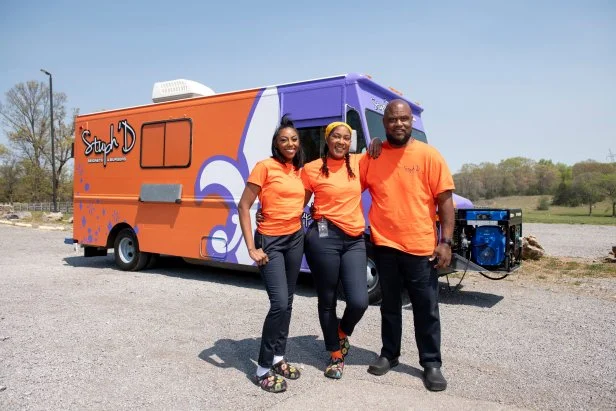
With seven trucks still fighting for survival, the Whiskey Trail challenge demonstrated just how competitive this season has become.
Strong cooking alone was no guarantee of success, and even the smallest mistakes in pricing, service speed, or customer appeal could prove costly.
As the competition continues, the field appears more evenly matched than ever, setting the stage for an unpredictable race in which every stop—and every sale—could determine who continues chasing the championship and who falls behind.