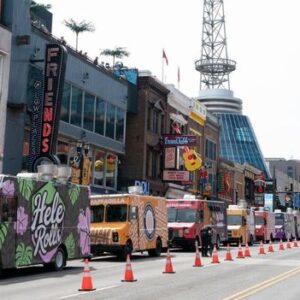
The 2026 premiere of The Great Food Truck Race delivered exactly the kind of high-pressure drama fans expect from the competition, with business decisions proving just as important as cooking skills. In the opening episode of Season 19, titled Music City Mayhem, the teams faced their first major challenge on the busy streets of Nashville, where every decision about menu design, customer appeal, and especially pricing could determine whether they gained an advantage or fell behind.

Among the teams entering the competition was Grounds Donut House, representing The Bronx, New York. Known for their oversized donuts and creative approach to desserts, the team arrived with strong confidence and a clear identity. To match this season’s “Sweet & Savory” theme, they decided to introduce a unique savory-filled donut, hoping their unusual creation would capture the attention of hungry customers and help them stand out from the competition.
However, their excitement quickly turned into frustration when their pricing strategy created an unexpected obstacle. Despite operating in one of Nashville’s busiest tourist areas, the team discovered that even a creative product could struggle if customers felt the price did not match the value.
As visitors filled the streets of Broadway, many people approached the truck with curiosity. The eye-catching donuts attracted attention, and potential customers were eager to see what Grounds Donut House had to offer. But the enthusiasm faded once people looked at the menu and saw the price tag. One by one, customers began walking away instead of placing orders, leaving the team watching their expected rush disappear.
The mistake became a major setback during their first selling period. The team had created a product designed to impress, but the high price point made it difficult to convert interest into actual sales. The problem was not a lack of visibility or customer traffic; it was the challenge of convincing people that the product was worth the cost.

For Grounds Donut House, the experience became an immediate reminder that food truck competitions are not only about making unique dishes. Success also depends on understanding the market, reading customer behavior, and finding the right balance between profitability and affordability. A price that feels too expensive can quickly push customers away, even when the product itself is creative and well-made.
While Grounds Donut House struggled with charging too much, another team faced the opposite problem by making a different pricing mistake. Their challenge was not attracting customers but making sure those sales actually generated profit.
Hoping to impress Nashville diners, the team invested heavily in premium ingredients for their opening menu. They wanted to create a memorable first impression by offering high-quality food that would separate them from the competition. However, worried that customers might hesitate to try unfamiliar flavors or expensive dishes, they decided to keep their prices extremely low.
At first, the strategy appeared to be a huge success. Customers quickly gathered around the truck, attracted by the affordable prices and appealing menu. Orders poured in, and the team found themselves overwhelmed by demand. The line continued growing as the crew worked nonstop to prepare food for the crowd.
From the outside, it looked like the perfect food truck victory. A long customer line, strong public interest, and a high number of completed orders seemed like signs of success. But behind the scenes, the reality was much more complicated.
When the team finally reviewed their numbers, they discovered that their impressive sales volume had not translated into meaningful profit. Because they had priced their dishes far below the actual cost of producing them, their revenue was barely enough to cover the expensive ingredients they had purchased. They had achieved popularity but failed to protect their margins.
The situation became a valuable lesson in the importance of smart business planning. Selling more food does not always mean making more money. Without proper pricing, even a truck surrounded by customers can end up losing money. A successful food business must consider ingredient costs, preparation expenses, customer expectations, and long-term sustainability.
The contrasting experiences of these two teams highlighted one of the biggest challenges in The Great Food Truck Race: finding the perfect pricing strategy. Setting prices too high can drive customers away before they even try the food, while setting prices too low can create financial problems despite strong demand.
The Nashville opening episode showed that the competition is not simply a test of culinary creativity. It is also a real-world business challenge where every choice has consequences. Teams must constantly balance innovation with practicality, customer appeal with profitability, and ambition with financial discipline.

For Grounds Donut House, the lesson was clear: a great product needs a price that customers are willing to accept. For the team that underestimated their costs, the lesson was equally important: popularity means little if every sale reduces your chances of making a profit.
As the race continues toward the $50,000 grand prize and the upcoming challenges ahead, these early mistakes serve as valuable warnings. The road to victory requires more than delicious food and a strong concept. It demands strategic thinking, careful budgeting, and the ability to understand what customers truly value. The dramatic opening in Nashville proved that in the world of food trucks, one pricing decision can make the difference between a breakthrough success and a costly failure.