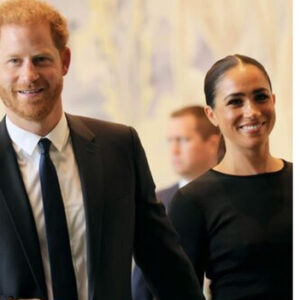
For years, Prince Harry and Meghan Markle have been building a new identity far away from royal duties. After stepping back from their roles within the Royal Family, the couple turned toward Hollywood, documentaries, lifestyle projects, and media production as a way to create a future based on their own stories and values.
But their latest project has revealed a challenge that even global recognition cannot automatically solve.

According to a report from Yahoo Entertainment, the Sussexes’ newest documentary “Cookie Queens” received strong reviews from critics but struggled to attract audiences during its theatrical debut.
The film represents an important milestone for Harry and Meghan because it marks the first theatrical feature produced by their company, Archewell Productions, with the couple serving as executive producers.
Directed by Alysa Nahmias, Cookie Queens follows a competitive Girl Scout cookie season, focusing on the young participants and the world surrounding the popular community tradition.
From a creative perspective, the documentary appeared to succeed.
The film received a strong response from critics, earning a 94% score on Rotten Tomatoes, suggesting that reviewers appreciated its quality and storytelling.

However, the reaction from moviegoers was very different.
During its opening weekend, Cookie Queens earned only $327,797 across 446 screens, placing it at number 15 at the domestic box office. Its average revenue per theater was approximately $735.
Perhaps the most surprising detail was that the documentary was outperformed by CatVideoFest 2026, a 70-minute compilation of viral cat videos, which ranked five positions higher during the same period.
The contrast created an unusual situation: a film praised by critics was struggling to create a commercial impact.
Industry analyst Jeff Bock of Exhibitor Relations suggested that the problem may not have been the documentary itself, but rather the timing of its release.
He explained that the film could have benefited from being released during the peak Girl Scout cookie season, when the topic was naturally more relevant to the public.
His conclusion was simple:
“Timing is marketing.”
This point highlights an important reality of entertainment: even a strong project can struggle if audiences are not emotionally connected to the moment of release.

The situation also brings attention back to Harry and Meghan’s larger Hollywood journey.
In 2020, the couple signed a reported $100 million Netflix deal, creating expectations that their global fame would translate into long-term entertainment success.
Their biggest achievement remains the Netflix documentary series “Harry & Meghan”, released in 2022. That project generated enormous worldwide attention because it focused directly on their personal experiences, their relationship with the Royal Family, and their decision to step away from royal duties.
However, later projects, including “Polo” and “With Love,” failed to generate the same level of cultural impact.
This creates the biggest challenge for the Sussexes: their strongest public attention has often come from their personal story, but building a sustainable entertainment company requires audiences to connect with projects beyond their names.
The case of Cookie Queens demonstrates this difference.
Harry and Meghan still have recognition. Their names remain powerful enough to generate global coverage. But fame alone does not guarantee that audiences will buy tickets, especially when the subject matter is not directly connected to royal controversy or personal revelations.
At the same time, the response from people who worked with Meghan suggests that the conversation is more complicated than simply labeling the project a failure.
One source who worked with the Duchess offered a positive assessment, saying:
“I have to say I really do like her. I haven’t met Harry, but she has been good to work with.”
That comment presents a different side of Meghan’s professional reputation, suggesting that behind the public debates surrounding her, some collaborators view her positively.
The most interesting aspect of Cookie Queens may not be the box office number itself, but what it represents.
For years, Harry and Meghan’s biggest advantage has been their ability to attract attention. Now, they are facing the harder task of transforming attention into lasting audience loyalty.
Their latest documentary proves that a project can be respected by critics and still struggle to become a commercial success.
For the Sussexes, the next chapter may depend less on their royal past and more on whether they can build a new identity where audiences show up not because of the controversy surrounding them, but because they genuinely want to see the stories they create.