One of the biggest talking points after Episode 2 of The Great Food Truck Race: Sweet & Savoury wasn’t an elimination—it was a price tag. Viewers were stunned after noticing that one item on Bug & Bear’s menu was listed at $56, immediately sparking heated debate across Reddit. While some defended the pricing by pointing out that many food trucks on the show sell premium dishes at similar prices, others argued there is simply no justification for paying restaurant-level prices at a food truck. The controversy has quickly become one of the most discussed moments of the episode, with fans questioning whether the competition is drifting too far away from what real food truck customers would actually pay.
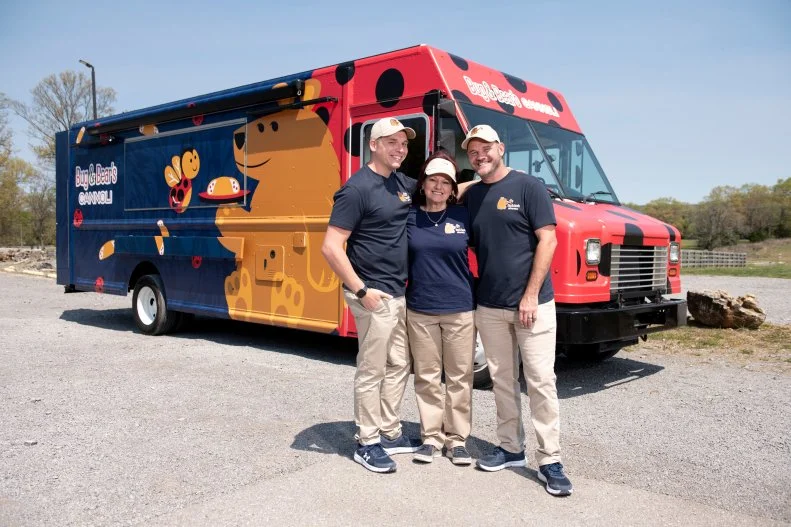
As Episode 2 sent the remaining teams to Franklin, Tennessee, competitors were challenged to create whiskey-inspired dishes while maximizing sales along the famous Tennessee Whiskey Trail. Every truck carefully adjusted its menu in hopes of increasing revenue, but one menu item ended up attracting attention for an entirely different reason.
Bug & Bear’s pricing quickly became the center of online discussion after viewers noticed that one of its featured items carried a $56 price tag.
For many fans watching at home, the number came as a complete shock.
Shortly after the episode aired, Reddit discussions exploded with reactions from viewers who questioned whether any food truck meal could realistically justify that cost.
One highly upvoted comment summed up the frustration shared by many fans.
“I would never pay that much for a cannoli from a food truck where I’m standing to eat it.”
The criticism wasn’t necessarily directed at the quality of the food itself.
Instead, many viewers argued that the overall experience simply didn’t match the price.
Unlike a traditional restaurant, customers purchasing from a food truck generally order at a window, wait outside, and often eat standing up or on nearby benches.
For some fans, charging more than fifty dollars in that setting felt difficult to justify regardless of the ingredients.
Not everyone agreed.
Other Reddit users defended Bug & Bear’s pricing, pointing out that premium food trucks featured on The Great Food Truck Race frequently offer specialty dishes with similarly high prices.
One commenter responded:
“Most of the food trucks have at least one item around that price.”
Supporters argued that contestants are playing a strategic game where maximizing revenue is just as important as attracting customers.
Because total sales determine the standings, offering a few high-priced specialty items can significantly increase earnings if enough customers are willing to buy them.
Still, the debate didn’t end there.
Another viewer compared the food truck prices directly to traditional restaurants.
“For that price, I’d rather go to the steakhouse nearby and order a 14-ounce ribeye for $60, sit at a proper table, and eat with real silverware. Paying $56 for a cannoli from a food truck is just crazy.”
That comparison quickly gained traction, highlighting what many viewers considered the biggest issue.
It wasn’t simply that the food was expensive.
It was that, for nearly the same amount of money, customers could enjoy a full-service dining experience at a high-end restaurant instead of eating beside a food truck.
The discussion also raised broader questions about the competition itself.
Some fans wondered whether the show’s unique environment encourages contestants to set prices that would rarely succeed in the real world. Because many customers deliberately visit The Great Food Truck Race filming locations specifically to support the competition and appear on television, they may be willing to spend far more than the average food truck customer would during a normal day of business.
Others argued that’s simply part of the game.
Contestants must constantly balance creativity, profitability, and customer demand, and if people are willing to pay premium prices, charging more becomes a smart competitive strategy rather than a mistake.
Whether viewers saw Bug & Bear’s menu as clever business or unrealistic pricing, one thing became clear after Episode 2: the team’s $56 menu item generated almost as much conversation online as the competition itself. In a season where every dollar can determine who survives another week, even the price of a single dish has become enough to divide the Great Food Truck Race fan community.